A facilities team has just received a quote for storage containers for sale. The steel box looks affordable, the delivery date appears workable, and the project seems ready for approval. Then someone asks the questions that change the budget: Can the truck reach the site? Is the ground stable? Will the doors face the correct direction? Does the unit need lighting, ventilation, shelving, or a security upgrade?
Those questions define the purchase. A container isn't ready for service when it leaves a depot. It becomes useful only after the right unit has been selected, delivered, positioned, secured, and integrated into daily operations. For school districts, contractors, municipalities, healthcare providers, and commercial facilities, the correct decision is based on total deployed cost, not the sticker price alone.
Table of Contents
- Rethinking the Storage Container Purchase
- Standard Sizes and Structural Specifications
- Evaluating New Versus Used Container Conditions
- Customization Options and Security Accessories
- Procurement Strategies and Cooperative Purchasing
- Site Preparation and Delivery Logistics
- Finalizing Your Storage Container Strategy
Rethinking the Storage Container Purchase
Most procurement teams begin with the box. They compare a 20-foot unit with another 20-foot unit, ask for the lowest quote, and treat delivery as a separate line item. That approach works only when the site is prepared, access is simple, and the container needs no meaningful adaptation. Institutional buyers rarely have such an easy deployment.
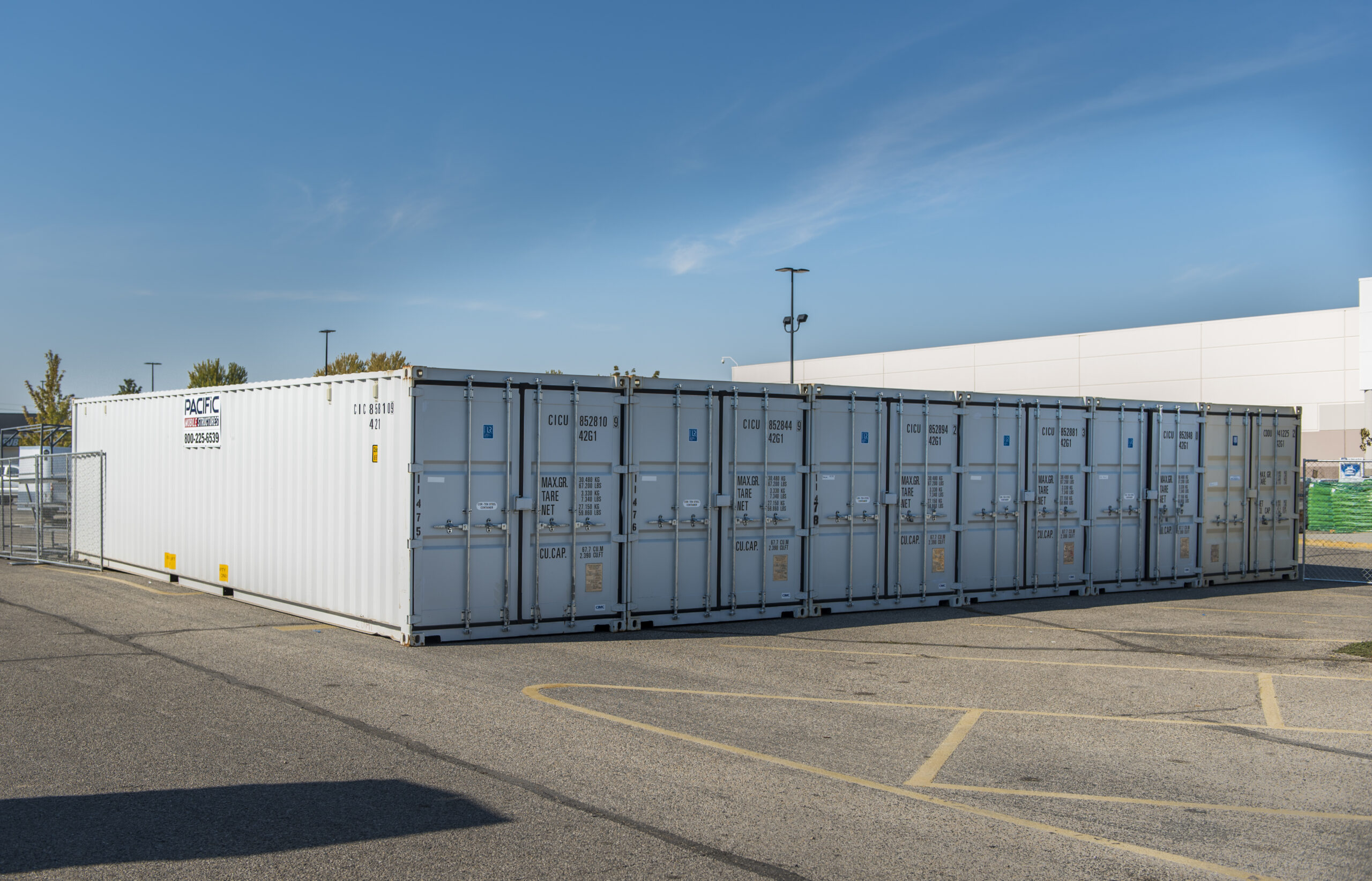
A school district may need secure athletic equipment storage beside an active campus. A construction company may need materials storage on uneven ground beside a project entrance. A municipality may need a unit placed behind an existing facility where trees, power lines, fencing, and traffic routes limit maneuvering. In each case, configuration and placement determine utility.
The shipping container industry provides useful context. One 2026 industry estimate placed the global shipping container market at USD 12.32 billion in 2025 and projected USD 16.57 billion by 2034, with an implied 3.37% CAGR. The same estimate placed Asia Pacific at 37.77% of the market in 2025. These figures describe the broader shipping container market, not storage sales specifically, but they show that containers are globally traded industrial assets with established resale and leasing channels. Fortune Business Insights outlines the shipping container market estimate and projection.
Total deployed cost
The purchase decision should account for five connected cost areas:
- Container condition: A weather-sealed used unit may meet the operational requirement, while a cleaner unit may be justified for a public-facing installation.
- Configuration: Door arrangements, ventilation, insulation, lighting, shelving, and office features can change the unit from basic storage into a purpose-built facility asset.
- Transportation: Distance, truck type, access limitations, and delivery timing all affect the final deployment.
- Site readiness: Ground stabilization, foundations, drainage, clearance, and local approvals may be required before delivery.
- Ongoing utility: A cheap unit that causes water intrusion, difficult access, or repeated repairs can cost more over its working life.
Practical rule: The approved budget should cover a usable container in its final position, not an unloaded steel shell at the supplier's yard.
Standardization explains why this category remains practical. Intermodal containers were standardized in the mid-20th century so cargo could move between ships, railcars, and trucks without repacking. That reduced handling time and costs, supported large-scale production, and created the used-container inventory now sold for storage and modular applications. Mordor Intelligence describes the historical and industrial development of the shipping container market.
The strongest procurement recommendation is simple: define the use, inspect the site, specify the required condition, and request a delivered-and-placed proposal. Price comparisons become meaningful only after every supplier is quoting the same operational outcome.
Standard Sizes and Structural Specifications
Container selection starts with the inventory, equipment, or workspace that must fit inside. Buyers shouldn't choose a unit because its external length sounds convenient. The internal opening, usable floor area, door position, stacking or shelving plan, and handling equipment all matter.
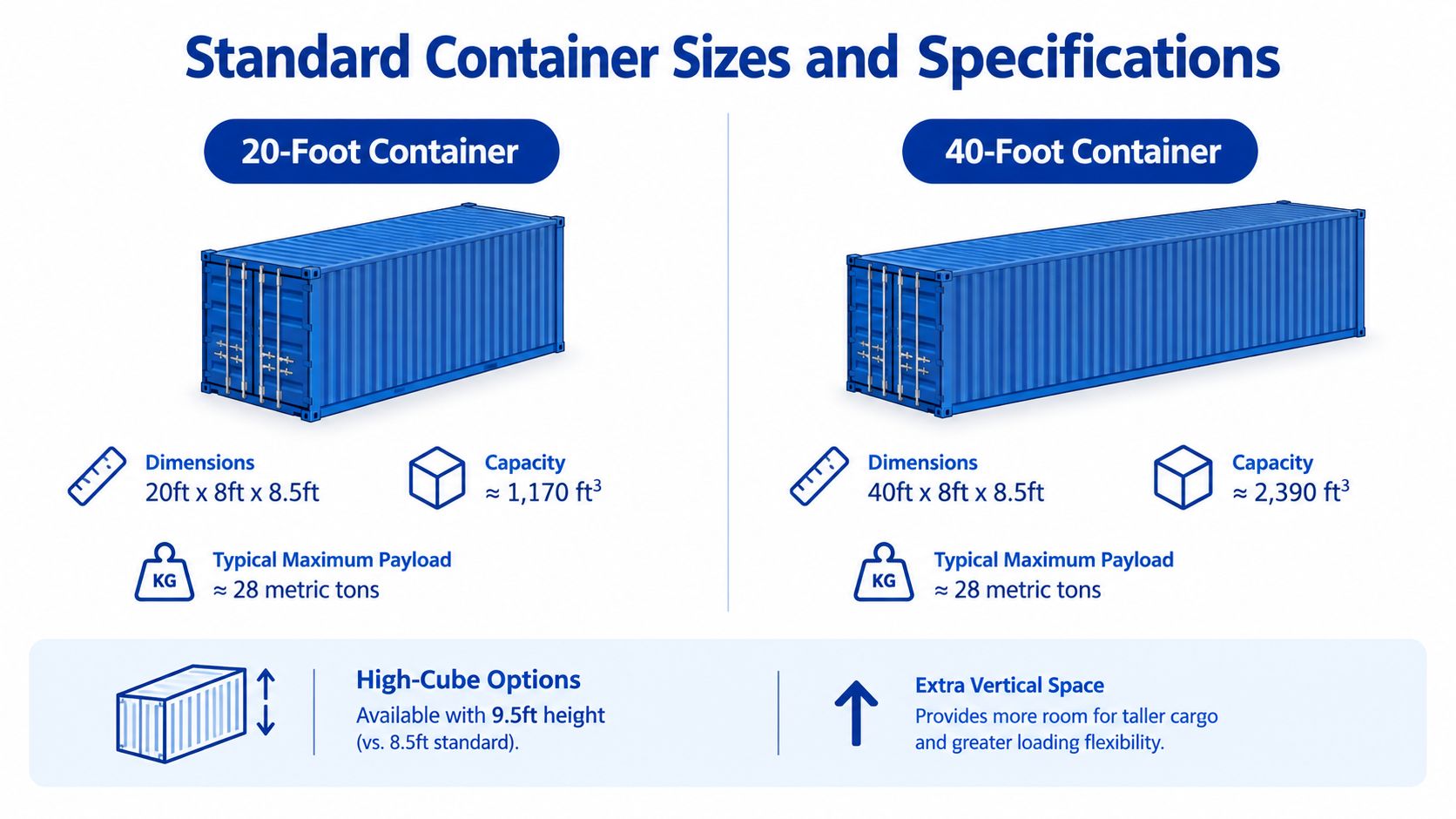
The most common choices are 20-foot and 40-foot containers. A 20-foot unit suits concentrated storage, smaller compounds, and sites where turning space is limited. A 40-foot unit provides a longer internal run for building materials, equipment, or palletized goods, but its greater length can create delivery and placement challenges. A high-cube format adds vertical clearance and may suit tall shelving, bulky equipment, or applications where overhead space is more valuable than additional floor area.
Match the footprint to the operation
A reliable specification process follows the movement of goods, not just their storage volume.
- List the largest items first. Record the length, width, height, turning radius, and handling method for machinery, sports equipment, construction materials, or maintenance tools.
- Map the access path. A container may hold the inventory but still fail operationally if forklifts, pallet jacks, carts, or personnel can't move through the doorway and around stored goods.
- Reserve working space. Shelving installed tightly against every wall can maximize capacity while making inspection and retrieval difficult. A facilities team should preserve enough aisle space for the actual handling method.
- Check vertical requirements. High-cube units can help with tall racks and bulky items, but the added height must also work with local clearance, delivery equipment, and site restrictions.
- Confirm door configuration. Standard end doors work for many uses. Double-door or side-access arrangements can be more practical when goods must be loaded from two directions or accessed without moving other items.
Structural details that affect value
Most freight containers use corrosion-resistant steel construction, commonly associated with Corten steel, and durable flooring designed for demanding cargo environments. Buyers should still inspect the roof, corner posts, side rails, door headers, locking bars, gaskets, and floor condition. A strong frame doesn't compensate for a leaking roof or doors that cannot close and seal.
The floor deserves particular attention. Marine-grade plywood or a comparable heavy-duty floor can support demanding storage, but chemical stains, soft areas, delamination, and standing water indicate potential repair needs. The inspection should also identify whether the unit has been modified, since cut-outs for doors, windows, or service penetrations can affect structural performance if they weren't properly reinforced.
A container's external dimensions are standardized, but its usable interior changes with wall thickness, doors, fittings, insulation, and modifications. Suppliers should provide internal measurements for the exact unit or configuration being quoted. Procurement documents should also state the intended loading method and whether the unit needs to remain suitable for transport or only for stationary storage.
Evaluating New Versus Used Container Conditions
New and used containers solve different facility problems. A one-trip container generally offers a cleaner appearance and limited prior wear, while a used unit can provide practical weather protection without paying for cosmetic perfection. Neither condition is automatically right. The correct choice depends on visibility, security, expected handling, and the consequences of failure.
Condition should follow the use
A public-facing site often benefits from a cleaner exterior. A school entrance, healthcare campus, bank property, or customer-accessible commercial location may require a professional appearance that supports the surrounding facility. In those settings, surface condition, paint consistency, door presentation, and visible corrosion deserve more weight.
A remote construction compound has different priorities. The team may care more about a sound roof, secure doors, a dry interior, and a frame that can tolerate demanding site conditions. Minor dents and surface rust may be acceptable if the unit remains structurally sound and weather-sealed.
Common descriptions include one-trip, cargo-worthy, wind and watertight, and as-is. These labels help organize the conversation, but they aren't substitutes for a condition report. A supplier's grading terminology should be tied to observable details, photographs of the actual unit, and written clarification about what the buyer will receive. Pacific Mobile's container grading guide provides a useful reference for comparing common condition categories.
| Condition choice | Practical advantage | Main concern |
|---|---|---|
| One-trip or near-new | Clean appearance, limited wear, strong presentation | Higher acquisition cost may buy more appearance than function |
| Cargo-worthy | Structural suitability for demanding use and transport-related requirements | Cosmetic wear can vary between units |
| Wind and watertight | Protects ordinary stored goods from weather when properly maintained | May not meet requirements for future shipping use |
| As-is | Lowest apparent entry point and potential for repair projects | Repairs, leaks, flooring issues, or security problems can change the economics |
Inspect the parts that fail first
The roof should be checked for punctures, repairs, and areas where water could pool. Doors should open smoothly, locking bars should operate without excessive force, and gaskets should form a continuous seal. Inside the unit, daylight through seams, damp odors, soft flooring, or evidence of chemical contamination should trigger further review.
A facilities director should request recent photographs of the exact container, not stock images. For larger purchases, an in-person inspection or independent condition report is justified. The purchase order should identify the agreed condition, repair responsibilities, delivery terms, and remedies if the delivered unit differs materially from the approved specification.
Cosmetic perfection is useful only when the site needs it. For ordinary yard storage, funds are usually better directed toward a sound structure, reliable sealing, access improvements, and a delivery plan.
Customization Options and Security Accessories
A standard steel box is a starting point, not a complete storage system. Modifications should be selected according to the materials stored, the people using the unit, the duration of deployment, and the environmental conditions at the site. Unplanned modifications after delivery are often more disruptive than specifying them before the unit leaves the supplier.
Security starts at the doors
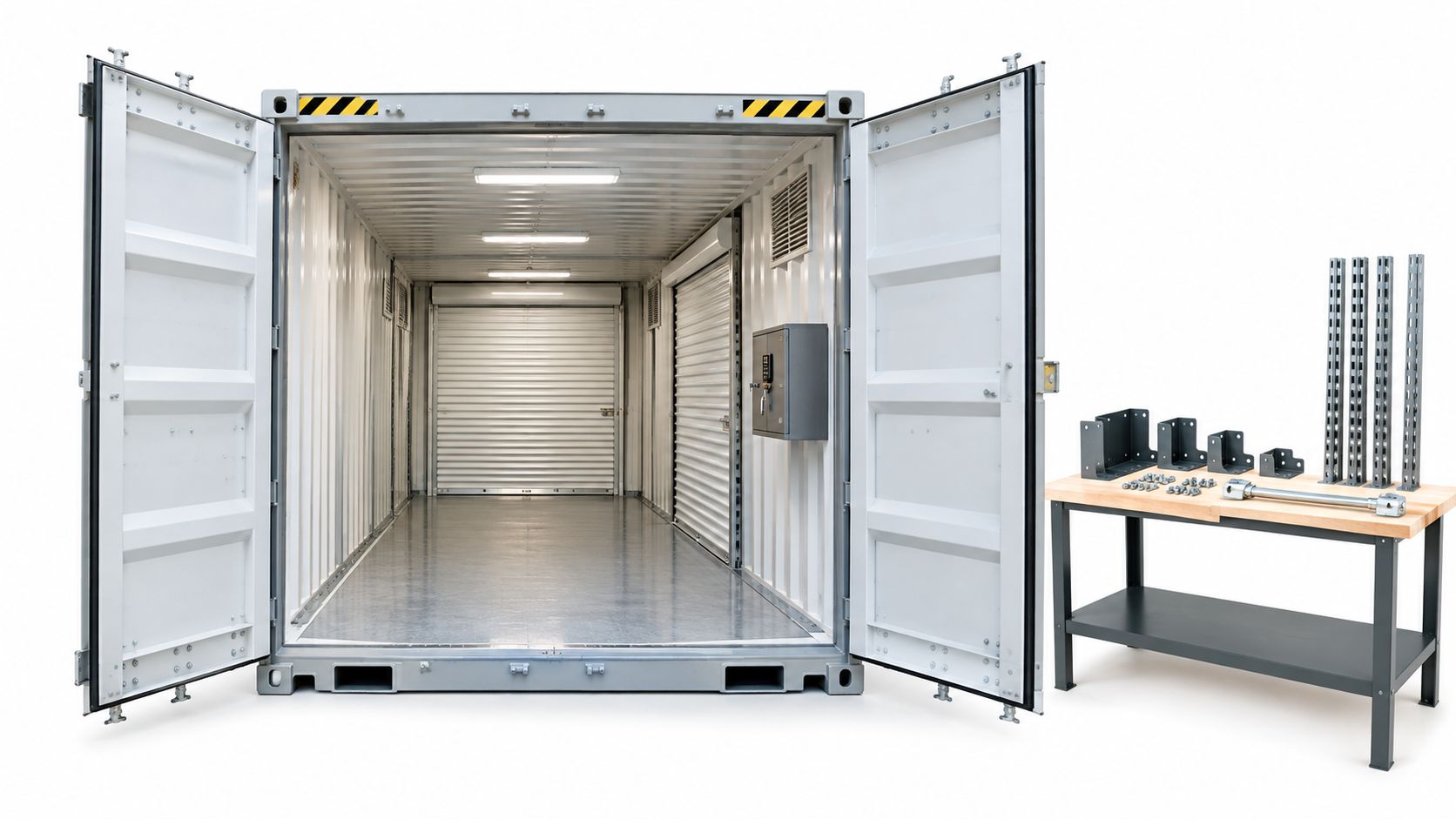
A standard lock can be exposed to weather, tampering, or accidental damage. A heavy-duty lockbox protects the padlock and makes direct cutting more difficult. Internal locking arrangements, alarm contacts, access-control hardware, and site lighting can provide additional layers, but the right combination depends on the risk profile and the facility's existing security procedures.
Double doors can simplify loading, although they also create another sealing and locking area to maintain. Personnel should be able to open and close the doors safely, and the surrounding pad should leave enough room for the door swing. A security upgrade that blocks access or creates a trip hazard has failed its operational purpose.
Protect the contents and the users
Ventilation helps reduce condensation and improve air movement, but passive vents aren't a substitute for climate control when the inventory has strict temperature or humidity requirements. Insulation and HVAC can make a container suitable for a more controlled environment, while lighting supports safer retrieval and inventory checks. Electrical work should be designed and installed according to applicable codes by qualified professionals.
Shelving, workbenches, cabinets, ramps, and storage organization can turn floor space into a workable inventory system. Heavy items should be supported by an appropriate layout, and modifications should avoid weakening structural members. A facilities team should also specify whether the unit is for storage only or whether personnel will spend regular working hours inside it.
Ground-level office containers and office-storage combination units suit projects that need both secure materials storage and a nearby administrative point. The distinction matters because an occupied workspace introduces requirements that ordinary storage doesn't. Pacific Mobile's security and container add-ons can help procurement teams compare accessories and security features before finalizing a specification.
Build the specification around risk
A useful modification schedule identifies the problem first and the product second:
- Unauthorized access: Lockbox, upgraded locking hardware, lighting, and site surveillance.
- Condensation: Ventilation, vapor control, insulation, and moisture monitoring where appropriate.
- Slow retrieval: Shelving, labeled zones, double-door access, and an inventory layout.
- Poor working conditions: Insulation, electrical service, lighting, HVAC, and a code review.
- Frequent loading: Ramps, dock-compatible planning, reinforced access areas, and clear maneuvering space.
The strongest quote separates the base container from every modification. That format lets procurement teams remove unnecessary upgrades without losing visibility into essential safety or security work.
Procurement Strategies and Cooperative Purchasing
The buying method can determine whether a container arrives in time for a project or remains trapped in an extended approval cycle. Private companies can compare outright purchase, rental, and lease structures according to cash availability and project duration. Public agencies and school districts must also consider solicitation rules, approved vendors, contract terms, and documentation.
Buy for stable demand, lease for changing demand
An outright purchase suits a facility with a durable storage requirement, a prepared site, and a clear expectation of continued use. Ownership can make sense when the unit will remain part of the organization's asset base and when the buyer can fund delivery, placement, modifications, and future maintenance.
Leasing is more practical when the requirement is tied to a renovation, seasonal program, temporary capacity gap, or uncertain project schedule. It can preserve capital for core facility work and make it easier to return, relocate, or replace the unit as conditions change. The contract still needs careful review. Termination provisions, relocation charges, maintenance responsibility, damage standards, and end-of-term removal should be explicit.
Market research has identified a shift toward leased and IoT-enabled containers, high-cube formats, and secondary uses such as portable storage and modular construction. That trend reinforces a practical point: buyers increasingly need configuration and deployment guidance, not just a purchase price. Global Market Insights discusses these market shifts in shipping containers.
Cooperative contracts reduce administrative repetition
For eligible public entities, cooperative purchasing can be the most efficient route. Contracts such as TIPS and KCDA may provide pre-negotiated terms, vendor qualification, and a purchasing framework that reduces the need to repeat a full competitive process for every routine acquisition. Each organization still needs to confirm eligibility, local compliance, scope, and required approvals.
The administrative advantage extends beyond paperwork. A cooperative contract can give a procurement officer a defined vendor pool, established pricing terms, and a clearer path from specification to purchase order. It can also help facilities staff focus on the deployment details that are often neglected, including site access, foundations, security accessories, and delivery scheduling.
A strong cooperative purchasing workflow looks like this:
- Confirm contract eligibility. The agency verifies that its entity and intended purchase fall within the contract's permitted scope.
- Write a performance specification. The document states size, condition, doors, accessories, delivery, placement, and site responsibilities.
- Request a contract-based quote. The quote separates equipment, modifications, transportation, setup, taxes, and optional services.
- Check total deployed cost. Finance and facilities review the complete amount rather than comparing the container line alone.
- Document acceptance. The purchase order records the approved condition, delivery assumptions, and inspection process.
Procurement teams shouldn't let a cooperative contract replace due diligence. It should remove redundant administration while preserving technical review. The vendor still needs to demonstrate that the proposed unit fits the site and the operational requirement.
Site Preparation and Delivery Logistics
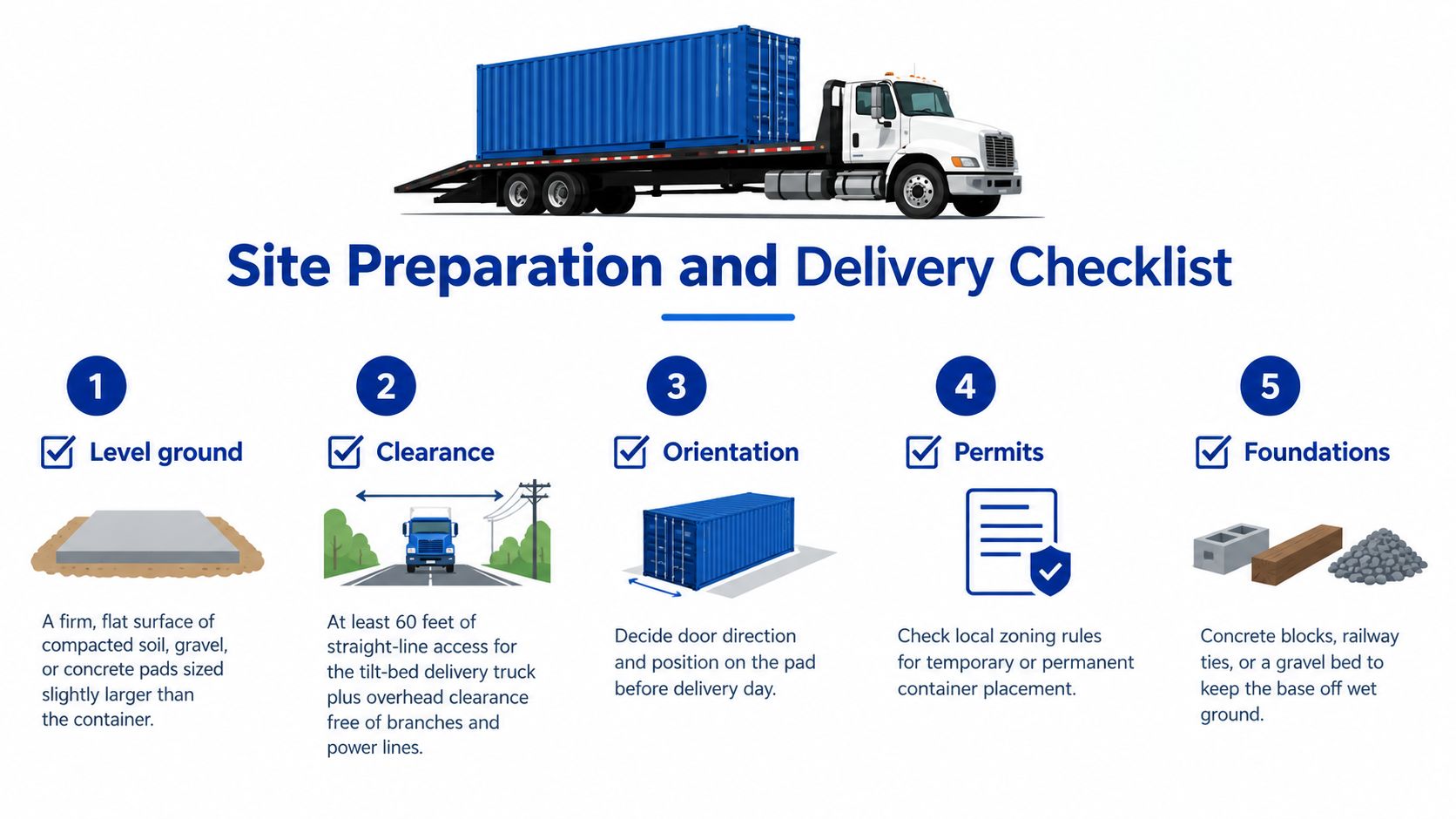
Delivery is where an apparently simple container purchase can become a facilities problem. A tilt-bed truck needs a safe approach, enough straight-line clearance, and a suitable surface for unloading. A container placed on soft or uneven ground can settle, twist, bind its doors, and retain moisture beneath the floor.
Inspect the route before ordering
A site walk should trace the entire delivery path from the public road to the final pad. Staff should check gates, turning areas, retaining walls, parked vehicles, low branches, utility lines, drainage channels, and soft shoulders. A route that works for a service van may not work for specialized container equipment.
The final position should be marked before the truck arrives. Door orientation, maintenance access, drainage direction, adjacent buildings, and future expansion all affect placement. Changing the orientation after unloading may require another mobilization, so the decision belongs in the delivery plan rather than on delivery day.
Ground preparation should provide a level, stable base. Depending on the site, that may involve compacted gravel, concrete pads, railroad ties, blocks, or another foundation method suited to the soil and load. Raising the container above wet ground helps protect the underside and supports drainage, but the foundation must distribute weight evenly and keep the unit stable.
Prevent avoidable delivery costs
The delivery quote should state whether it includes placement, leveling, permits, traffic control, and removal of obstacles. If a crane or special equipment may be needed, that requirement should be identified during the site survey. Rescheduling a truck because a gate is locked or a power line blocks access can create costs that weren't visible in the original steel-box price.
Facilities teams that manage several containers should coordinate placement with broader yard activity. A practical middle-mile yard operations guide can help teams think through traffic flow, staging, access routes, and congestion around active delivery areas.
Use a written readiness check:
- Ground: The pad is firm, level, drained, and prepared for the selected foundation method.
- Access: The delivery route is open, measured, and free of branches, wires, parked equipment, and temporary barriers.
- Orientation: Door direction and final position are approved by the facility owner.
- Permissions: Zoning, site, fire, and temporary-structure requirements have been checked with the relevant authority.
- People: A responsible site contact is present and knows the delivery instructions.
- Acceptance: Staff have a plan to inspect the roof, doors, floor, locks, and exterior before signing delivery paperwork.
A portable storage container can be useful only when placement supports the work around it. Pacific Mobile's portable storage container service is one example of a supplier offering storage deployment with delivery and relocation considerations.
The delivery driver can advise on equipment limitations, but the buyer remains responsible for site readiness unless the contract states otherwise. The safest process gives the supplier current site photographs, a marked plan, route measurements, and clear contact information before dispatch.
Finalizing Your Storage Container Strategy
The right storage container is the one that performs its assigned job without creating a second facilities project. The decision should connect the operational need to the condition, configuration, procurement route, and site plan.
A simple decision matrix helps:
- Public-facing and long-term: Favor a clean exterior, reliable doors, professional modifications, and a placement plan that fits the surrounding property.
- Remote and functional: Prioritize structural integrity, weather sealing, security, and easy delivery over cosmetic perfection.
- Temporary or schedule-sensitive: Examine leasing, relocation provisions, and turnkey delivery before committing to ownership.
- High-volume institutional purchase: Use a cooperative contract where eligible, but retain a site-specific technical specification.
- Sensitive inventory or occupied use: Require a deliberate review of insulation, ventilation, electrical systems, HVAC, safety, and applicable codes.
A procurement checklist
- Define the use. Identify the goods, equipment, personnel, access method, security exposure, and expected deployment period.
- Select the footprint. Compare 20-foot, 40-foot, and high-cube options against internal clearance, floor layout, delivery access, and available site area.
- Set the condition standard. Decide whether the requirement is one-trip, cargo-worthy, wind and watertight, or as-is, then require evidence for the quoted grade.
- Specify modifications. List doors, lockboxes, ventilation, lighting, insulation, HVAC, shelving, ramps, and electrical work as separate line items.
- Survey the site. Verify the route, ground, overhead clearance, door orientation, drainage, foundation, permits, and neighboring operations.
- Choose the purchasing method. Compare ownership and leasing, then check cooperative purchasing options for public-sector eligibility.
- Request a complete quote. Require container, modifications, delivery, placement, foundations, taxes, permits, and removal terms in writing.
- Approve and inspect. Record the agreed condition, inspect the delivered unit, and document any discrepancy before acceptance.
The most expensive mistake is approving a unit before the organization knows how it will be deployed. Procurement officers and facilities managers should treat storage containers for sale as infrastructure, even when the asset is temporary. That mindset produces better specifications, fewer delivery surprises, and a storage solution that supports the operation from the first day.
Pacific Mobile Structures, Inc. provides storage containers for rent and purchase, ground-level office containers, custom modifications, and turnkey delivery and setup for temporary and permanent space needs. Procurement teams evaluating storage containers for sale should review the available solutions and deployment services at Pacific Mobile Structures, Inc..