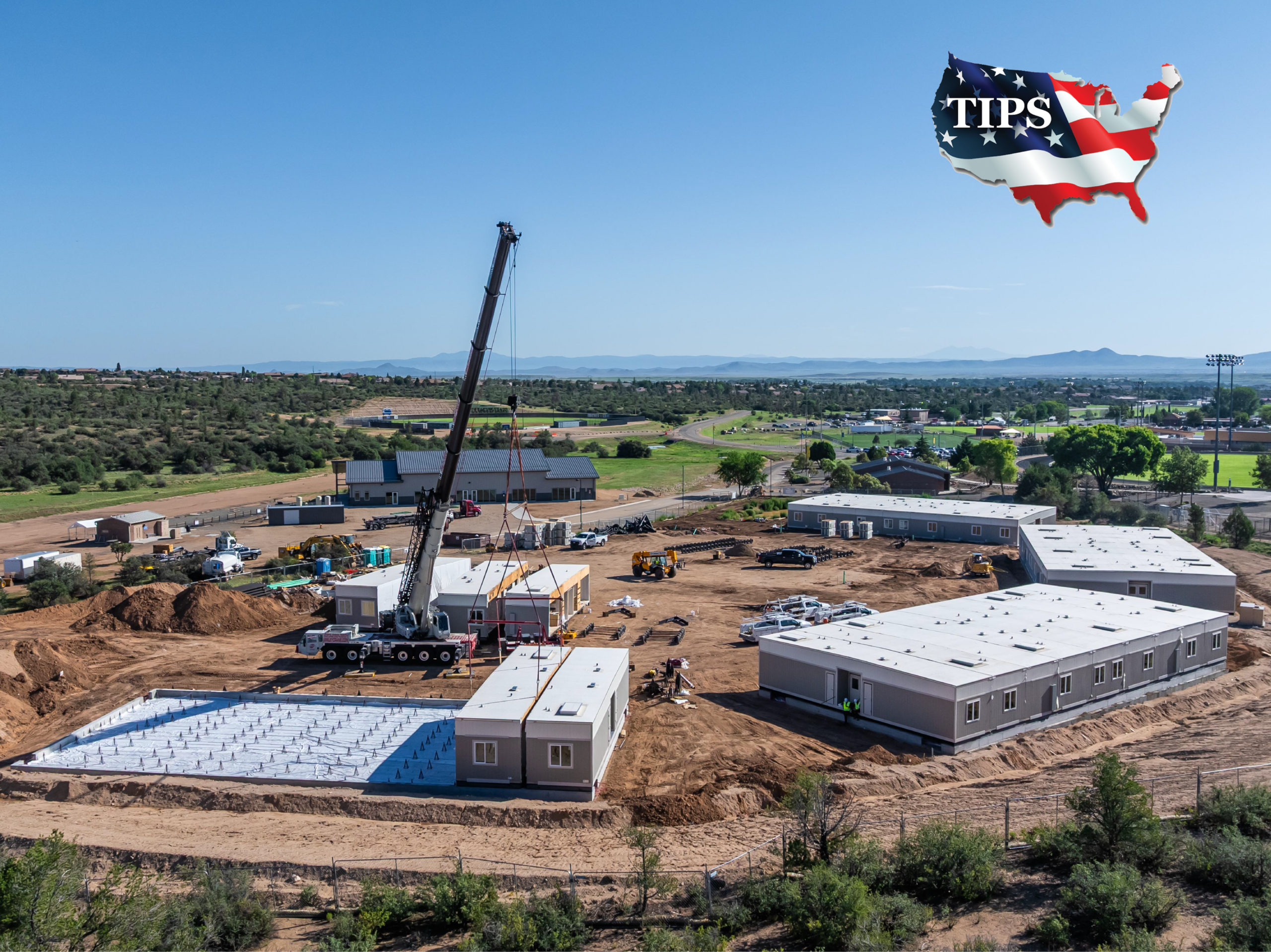
A school district loses two classroom wings during a February freeze. Students still need instruction, staff still need offices, and the next academic term won't wait for a conventional construction schedule. The facilities director starts by searching for used modular buildings for sale, then discovers that the work isn't scrolling through listings. It's matching a building's physical condition, certification history, site requirements, and financing structure to a deadline.
That distinction matters. A used modular building can solve a capacity problem quickly, but a low asking price won't protect you from transport complications, missing plans, foundation changes, or code rejection. The buyers who avoid expensive surprises treat the purchase as a four-phase workflow: market sizing, inspection, compliance, and financing. The listing is only the starting point.
Table of Contents
- Why Buyers Are Turning to Used Modular Buildings
- What the Resale Market Looks Like in 2026
- The On-Site Inspection Checklist Buyers Should Run
- Refurbishment Steps Before Deployment
- Code and Certification Risk Across State Lines
- Financing, Procurement, and Paperwork to Line Up
- Your Acquisition Workflow From Listing to Move-In
Why Buyers Are Turning to Used Modular Buildings
The district in that opening scenario may tour a dealer yard because a relocatable classroom already has walls, doors, mechanical systems, and a known footprint. Instead of waiting for every stage of a site-built project to occur in sequence, the district can evaluate an existing asset while site preparation and approvals move forward. That parallel work is often the practical difference between opening on schedule and placing students in temporary arrangements that nobody wanted.
Used modular buildings fit several operational realities:
- Compressed schedules: An existing unit can be selected, inspected, refurbished, transported, and installed without starting the building design from a blank sheet.
- Capital discipline: Buyers can compare an available asset and its refurbishment scope against a new custom order, rather than approving an open-ended construction process.
- Relocation experience: Dealers, movers, crane operators, and installation crews understand the steps required to disconnect, transport, set, and reconnect modular structures.
- Reuse pressure: Reconditioning a sound structure keeps usable steel, wood, fixtures, and equipment in circulation instead of treating the building as disposable.
The commercial case has also become easier to understand. The U.S. permanent modular market reached $20.5 billion in 2025, representing about 5.1% of construction activity in key segments, and the Modular Building Institute projects a 6.5% compound annual growth rate through 2030. That analysis also explicitly tracks the sale of used units, confirming that resale is a recurring part of the industry rather than an unusual side transaction. Modular Building Institute industry analysis
Field observation: The building year gets attention during the first phone call. The frame, maintenance record, code documents, and relocation history determine whether the unit works.
Modular construction has a long history of repeated deployment. The Modular Building Institute traces modular buildings to the 1600s, with later postwar growth in the United States and United Kingdom tied to reconstruction, speed, and housing shortages. That history helps explain why a properly maintained building can remain useful across multiple owners and sites.
The rest of the buying decision follows four gates. First, establish whether the resale market has the right building type and capacity. Next, inspect the structure and systems. Then verify factory certification and destination-site approval separately. Finally, align procurement, financing, ownership records, and site readiness before releasing the unit.
What the Resale Market Looks Like in 2026
The resale market is broad, but it isn't uniform. A buyer may find many basic office units while struggling to locate a building with compliant accessible restrooms, a healthcare-ready layout, or documentation acceptable to a particular jurisdiction. Availability depends on the building's former use, configuration, frame type, condition, and location, not just the words in the listing title.
The most useful valuation evidence comes from the installed base. A North American market summary reports a fleet of roughly 500,000 units, with approximately 300,000 in private fleets and 200,000 in public fleets. The same dataset reports $4.7 billion in total industry revenue for 2024, including 10% from used unit sales. Those figures describe a substantial secondary channel, but they don't establish a universal price for every building. North American modular sales summary
Condition and construction quality deserve more weight than the calendar year. The cited market summary says existing units sold for an average of 143% of original cost across product types, while relocatable buildings were reported to retain about 50% of original value after 18 years. Those findings shouldn't be applied mechanically to a single listing. They show that resale value can depend on condition, quality, and frame type, with larger, higher-quality steel-framed units holding value longer.
A practical comparison looks like this:
| Buyer question | What to evaluate |
|---|---|
| Is the unit genuinely usable? | Envelope condition, structural frame, mechanical systems, fixtures, and documentation |
| Does the layout fit? | Room dimensions, circulation, door swings, restrooms, utility locations, and accessibility |
| Can it move? | Outriggers, transport configuration, route restrictions, permits, and set method |
| Will the destination accept it? | Factory insignia, approved plans, local code review, foundation, anchoring, and inspections |
Don't use a seller's inventory page as a substitute for a project estimate. Review current options on Pacific Mobile Structures' used products page, then ask for the building's all-in acquisition scope, including transport, crane or set work, refurbishment, site connections, permits, and inspections. The sticker price is only one line in that comparison.
The On-Site Inspection Checklist Buyers Should Run
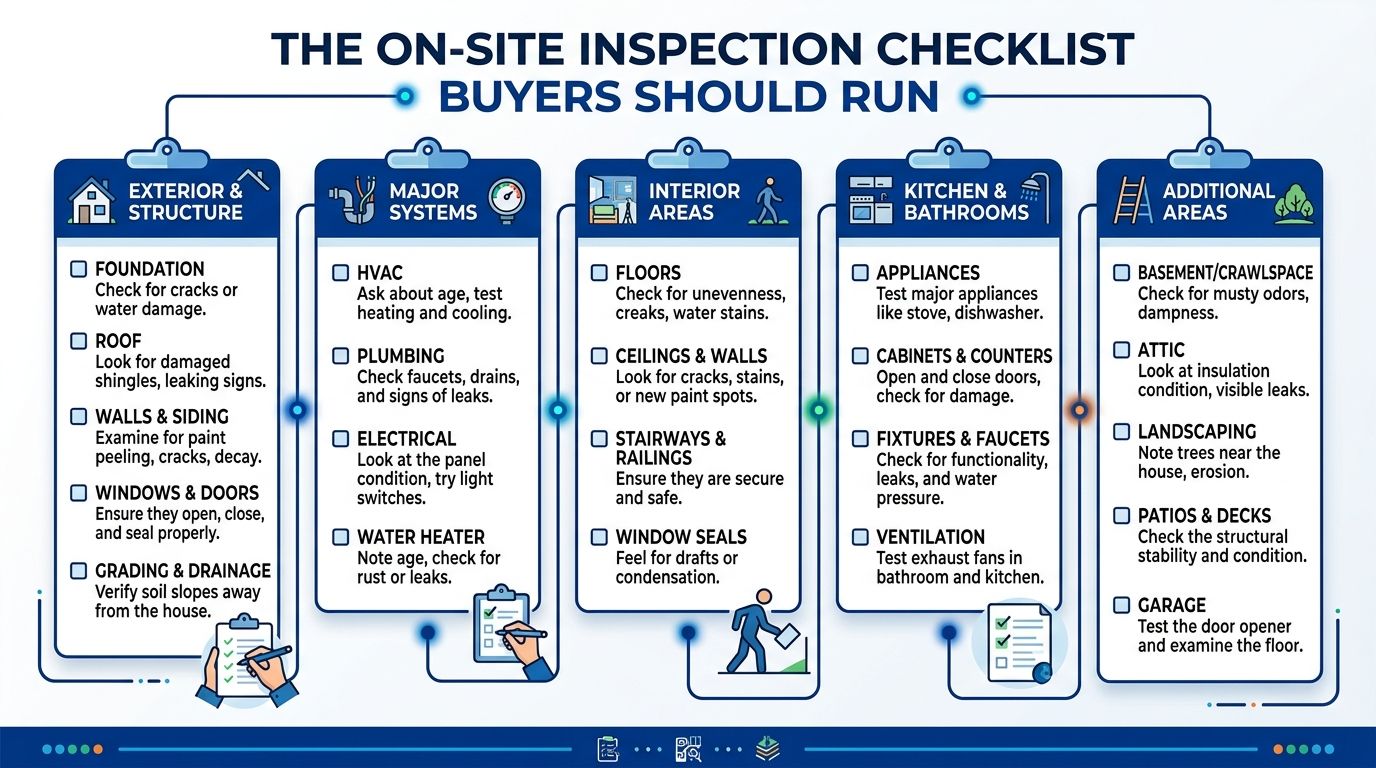
A useful inspection follows the path water, loads, electricity, and people take through the building. Start outside, then move to the frame, interior, systems, and finish details. A video walkthrough can help screen several listings, but it can't replace hands-on access to the roof, underside, mechanical equipment, and concealed damage areas.
Start with the envelope and frame
Look along roof seams, EPDM patches, drip edges, and every HVAC penetration. Interior ceiling staining near those locations often reveals a recurring leak, even after a seller has replaced visible ceiling tiles. Ask whether repairs addressed the source or only the symptom.
Underneath, inspect outriggers, cross-members, welds, and bearing points. Bent outriggers, twisted cross-members, or visibly repaired welds can indicate a difficult tow or improper support. Photograph each concern and mark its location on the floor plan so the contractor can price the work accurately.
Test systems instead of admiring them
Inside the building, turn on every light, test outlets and GFCI protection, run each faucet, and flush every toilet. Check for slow drains, supply leaks, weak exhaust, damaged shutoffs, and fixtures that look clean but don't operate correctly.
HVAC deserves its own line in the inspection report. Record equipment labels, inspect filters, look for corrosion, and examine refrigerant lines and condensate drainage. A well-serviced older rooftop unit may be a more dependable asset than newer equipment with neglected maintenance.
Separate cosmetic work from functional risk
Flooring transitions, cabinet hardware, paint, door alignment, and damaged trim affect the refurbishment allowance, but they shouldn't distract from structural or mechanical defects. Check door swings and accessible hardware carefully, especially when the building will serve students, patients, or public visitors.
For an additional general inspection reference, Awesim Building Consultants' inspection guide offers a useful checklist format that can help organize field observations. Use it as a supplement, not as a replacement for a modular specialist who understands transport damage, support systems, and certification records.
Inspection rule: If the buyer can't see it, test it, or document it, the purchase agreement should identify who will verify it and who pays if it fails.
Refurbishment Steps Before Deployment
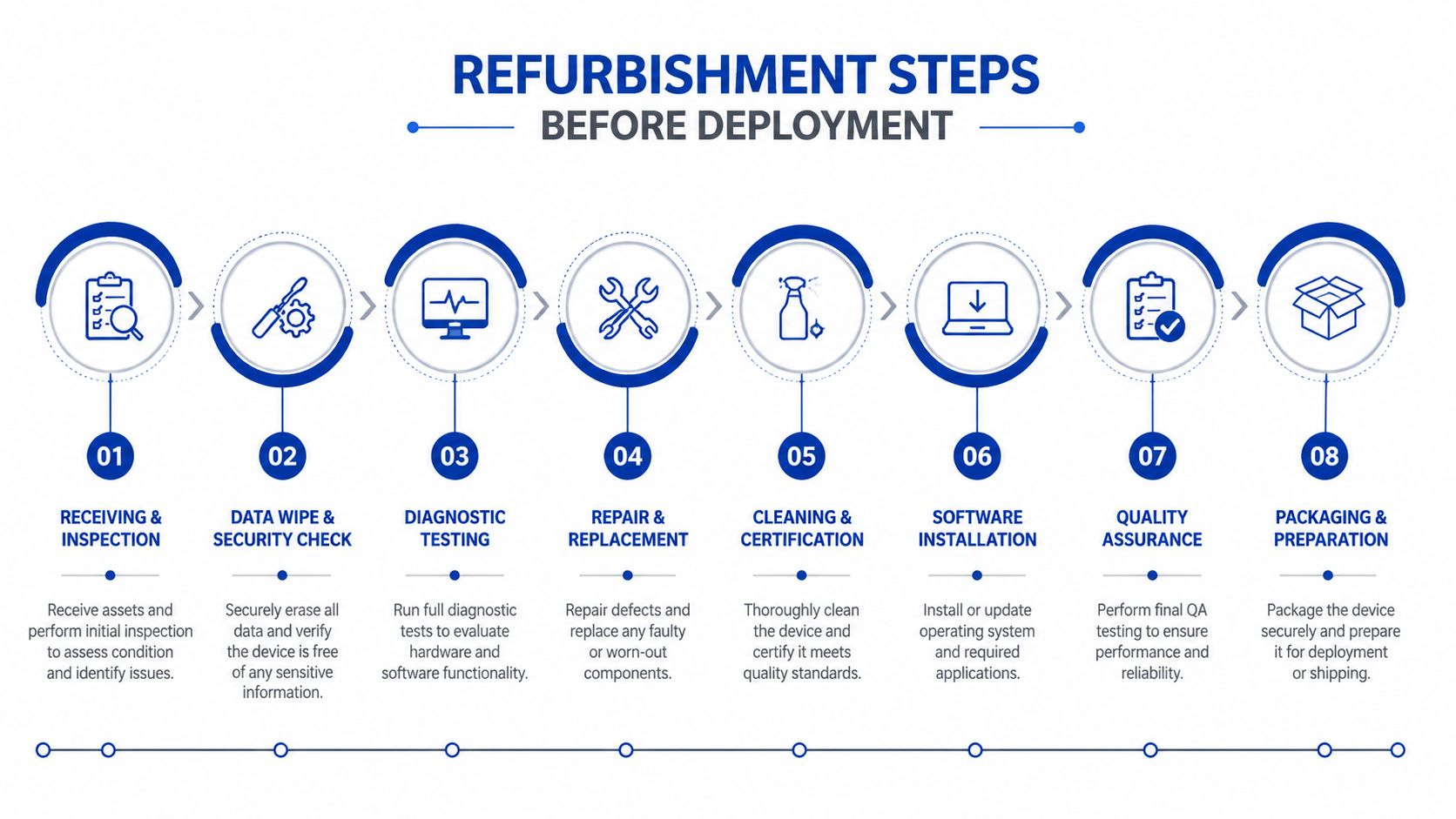
A unit can look ready in a dealer's yard and still arrive at the jobsite missing hardware, carrying concealed transport damage, or requiring work that was never included in the price. A traceable refurbishment process reduces those surprises. Research on demountable modular systems describes reuse through take-back, material tracking, quality inspection, and touch-ups. Research on reuse in demountable modular systems
Take-back starts when the dealer receives the building. The crew should record the unit's identity and inventory components removed during deinstallation. Asset tracking then follows doors, panels, fixtures, equipment, and loose parts through the yard. Without that record, the delivered building may match the listing while lacking trim, hardware, or equipment needed for installation.
Quality inspection should compare the physical unit with original build information where those records exist. The written scope must distinguish visual review from functional testing. It should state whether HVAC operated, plumbing was pressure-tested, electrical devices were tested, and roof areas were examined beyond ground-level photographs.
Touch-ups usually divide into cosmetic and functional work. Cosmetic items include paint, flooring transitions, cabinet hardware, ceiling tiles, and minor trim. Functional repairs may involve roof coatings, HVAC compressor replacement, plumbing, electrical corrections, or accessibility modifications. ADA fixture retrofits can change the layout and approval path, so treat them as design and compliance work rather than ordinary finish work.
Request these documents before signing:
- Refurbishment scope: List every repair, replacement, test, and exclusion.
- Condition photographs: Show roof areas, underside framing, mechanical equipment, and damaged finishes.
- Testing record: Separate equipment that was tested from equipment that was only viewed.
- Completion responsibility: Identify who performs final touch-ups after transport and set.
- Change procedure: Explain how concealed damage or missing components will be handled.
For valuation, review the unit's original purchase price, building size, floor-plan utility, condition, and value-added systems such as HVAC, bathrooms, kitchens, and break rooms. Used modular building valuation guidance Do not price the building as scrap, and do not assume every installed feature adds value. A feature contributes only when it works, fits the destination, and supports the intended use.
Code and Certification Risk Across State Lines
The most expensive failure I see in used modular acquisitions isn't always physical damage. It's a code and certification mismatch discovered after the buyer has committed to transport, site work, or a scheduled occupancy date.
Treat compliance as two separate tracks. The factory track concerns how the unit was designed, built, inspected, and labeled. The site track concerns how the destination jurisdiction will approve the foundation, anchoring, utilities, accessibility, occupancy, and final installation.
Factory records come first
Ask the seller for the data plate or compliance decal, the certifying agency insignia, approved plans, inspection records, and any alteration history. Confirm that the physical unit matches the documents. A relocated building with undocumented wall changes, restroom modifications, or mechanical substitutions may require additional review even if the original structure carried a valid label.
A prior approval isn't automatically portable. State and local rules can require new review, inspectability, or inspection before sale or permanent placement. North Dakota, for example, notes that used modular structures without the proper third-party inspection or label may remain subject to state and local code enforcement. AIA Contracts guidance on modular building codes
The destination site has its own approval path
Before committing funds, send the building information to the authority having jurisdiction. Ask what documents it needs, whether the original insignia is recognized, whether plan review is required, and which inspections will occur after relocation. Then have the site engineer address foundation design, anchoring, utility connections, drainage, stairs, ramps, and accessible routes.
| Compliance area | Factory phase | Site phase |
|---|---|---|
| Building code | Confirm the original code path and approved design | Confirm the destination jurisdiction's current requirements |
| Certification | Verify the data plate, insignia, and third-party inspection record | Confirm whether local or state re-inspection is required |
| Structure | Review frame design and documented alterations | Engineer foundation, bearing, anchoring, and installation |
| Utilities | Review designed service points and equipment | Approve connections, disconnects, capacity, and testing |
| Accessibility | Compare documented ramps, doors, restrooms, and routes | Verify the completed site route and installed hardware |
Schools, healthcare facilities, and public buildings need particular care because occupancy and accessibility requirements can be exacting. Michigan's rules, for example, include inspection requirements for relocated used modular classrooms and distinguish pathways based on structural condition and approval status. Michigan requirements for relocated used modular classrooms
Use a permitting workflow that assigns responsibility by document and milestone. Pacific Mobile Structures' modular permitting guide can help buyers understand how factory documentation and site approvals fit together, but the local authority remains the final decision-maker.
Financing, Procurement, and Paperwork to Line Up
Financing becomes easier when the buyer treats the building as an asset with a documented installation plan, not as a piece of inventory bought in isolation. A lender, cooperative purchasing administrator, or public procurement officer will want to understand ownership, condition, transport, site readiness, and the total project obligation.
Public and institutional buyers should check whether the dealer participates in an accepted cooperative purchasing contract. State and national cooperatives can reduce administrative work when the buyer's agency is authorized to use the contract, but the contract doesn't eliminate the need to verify scope, delivery terms, warranties, inspection obligations, and site work.
Common transaction structures include:
- Outright purchase: The buyer pays for the building and separately coordinates transport, installation, site work, and connections unless the seller includes turnkey services.
- Lease-purchase: The buyer makes scheduled payments with an ownership or buyout provision defined in the agreement.
- Lease or rental: The buyer pays for use while retaining flexibility, which can suit temporary needs or uncertain site control.
- Cooperative procurement: The buyer uses an existing purchasing vehicle when the dealer, product, and agency requirements align.
Used inventory can move while financing is still under review. Engage the lender before the inspection is complete, provide the likely acquisition scope, and ask how it treats the building, transport, installation, and site improvements. Buyers considering an acquisition loan may also find it useful to understand using an SBA broker for acquisitions, particularly when the building purchase is part of a broader business transaction.
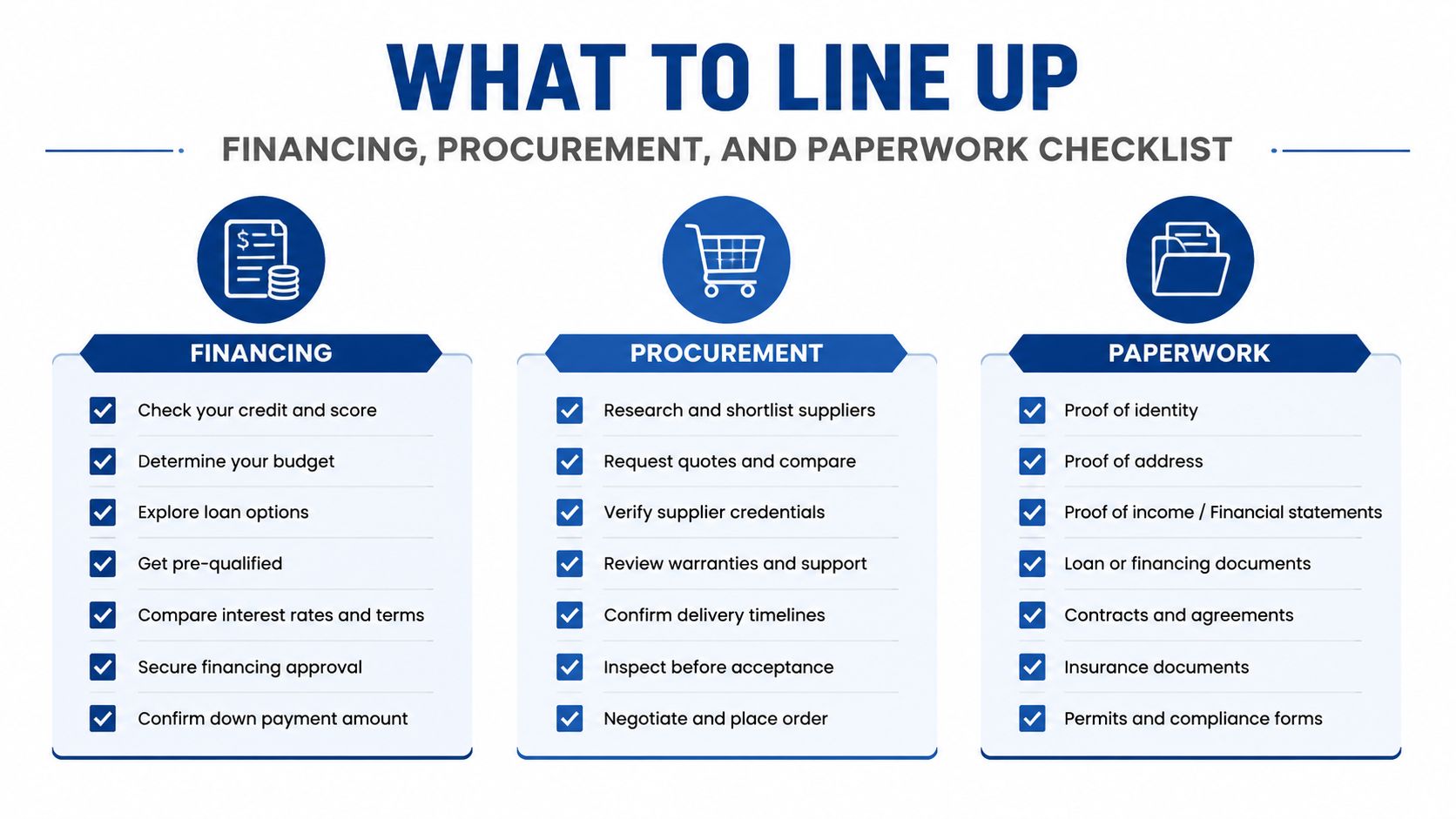
Prepare a document package that includes:
- Ownership evidence: Clear title, bill of sale, or equivalent transfer records.
- Building identity: Data plate information, serial or asset records, and photographs.
- Design records: Original floor plans, approved plans, alteration notes, and prior certification documents.
- Delivery scope: Transport route assumptions, permits, crane or set requirements, and installation responsibilities.
- Site readiness: Foundation and utility stub-up confirmation from the responsible engineer or contractor.
- Commercial terms: Refurbishment scope, exclusions, payment milestones, warranty language, and release conditions.
Use a formal pre-purchase checklist rather than relying on email promises. Pacific Mobile Structures' modular buyer pre-qualification resource can help organizations identify what they need to establish before moving into a purchase discussion.
Your Acquisition Workflow From Listing to Move-In
A disciplined purchase can be run as a sequence of decisions. Each step should produce a document or approval that supports the next one.
- Shortlist against the actual need. Define rooms, occupancy, accessibility, services, footprint, intended duration, and destination before comparing listings.
- Request the complete listing file. Obtain current photographs, floor plans, dimensions, data plate information, building history, and the seller's refurbishment scope.
- Walk the unit. Visit the yard when possible. If distance prevents that, use a live video walkthrough that includes the roof, underside, mechanical equipment, interiors, and documentation.
- Commission an independent inspection. Have a qualified inspector evaluate envelope, frame, electrical, plumbing, HVAC, accessibility, and transport-related damage.
- Confirm code and permits. Send the records to the destination authority and site engineer. Get written direction on plan review, foundation, anchoring, utilities, and inspections.
- Lock in the funding path. Secure purchase authorization, lender terms, cooperative purchasing paperwork, or lease documentation before the unit release date.
- Coordinate deinstallation and site preparation. Schedule disconnection, transport, foundation work, crane or set operations, utility connections, final repairs, and occupancy approvals as related workstreams.
The order protects the budget. Inspection findings should define the refurbishment scope, and that scope should inform the final purchase order and contingency reserve. Financing shouldn't begin only after the inspection has created a renegotiation, because the seller may not hold an attractive unit while the buyer restarts approval.
Release condition: Don't authorize transport until title transfer, permits, route planning, foundation readiness, certification records, and the installation schedule are aligned.
Keep a single project file with the signed purchase documents, photos, inspection report, approved plans, transport permits, engineering letters, invoices, and change orders. A missing title record can delay ownership transfer. A missing plan can delay review. An unfinished foundation can leave a delivered building waiting at the wrong stage of the project.
For buyers comparing used modular buildings for sale, Pacific Mobile Structures, Inc. offers used mobile offices, modular buildings, and portable storage, along with sales, leasing, modular construction, delivery, setup, and site-related services for education, healthcare, government, and commercial users. Review available options and request a project conversation through Pacific Mobile Structures, Inc. so your building choice, compliance documents, refurbishment scope, and move-in plan are evaluated together.