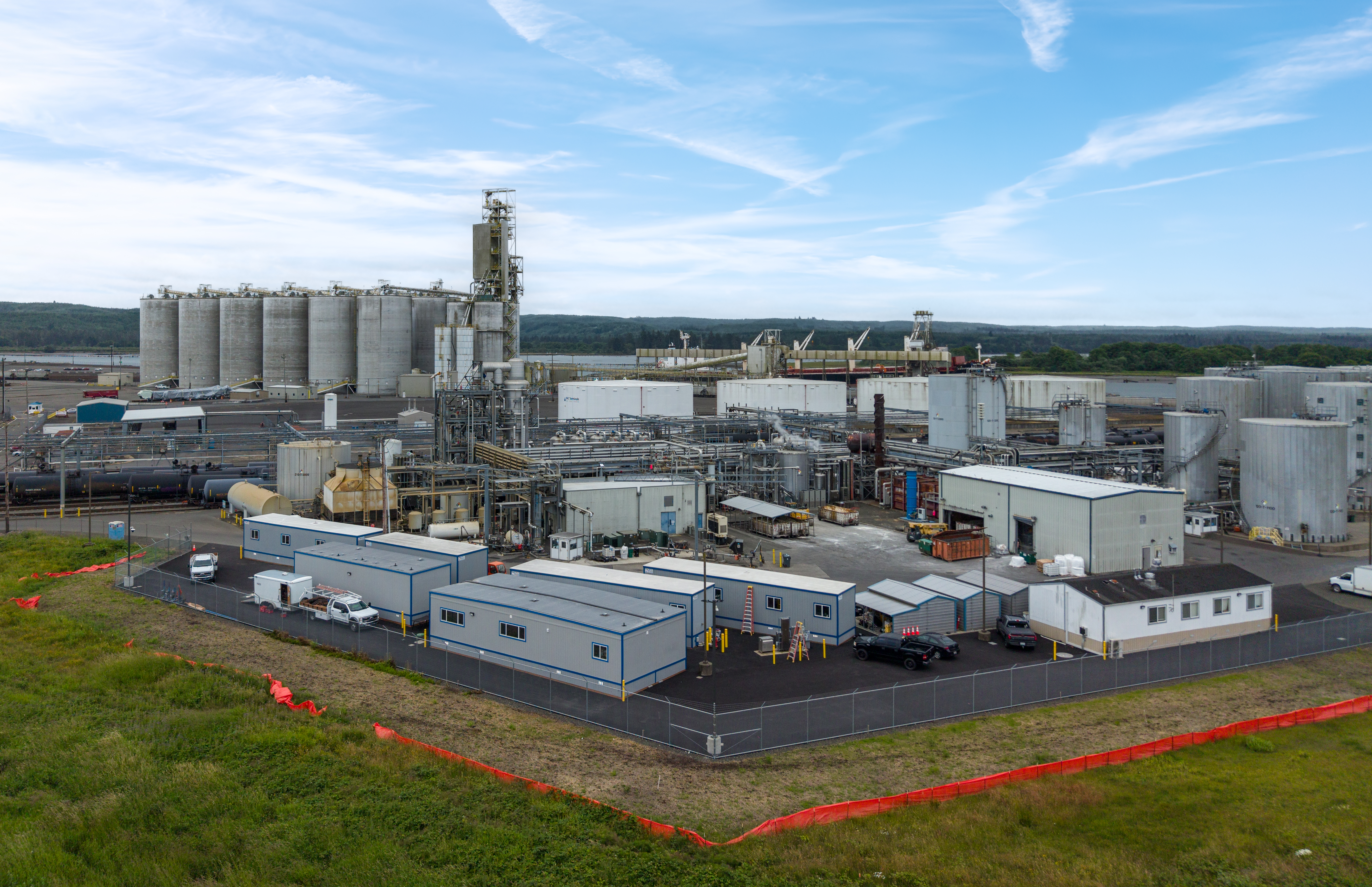
A school district may need classroom space before the next term, while a clinic is trying to keep appointments running through a renovation. A business might need an office at a project site now, not after a permanent building is designed and built. In each case, a listing price can make a portable building look like an easy answer. The key decision is whether the building can be delivered, permitted, installed, and used at an acceptable landed cost for the time it's needed.
The right comparison starts with three questions: How long will the space be needed? Which code and occupancy rules apply? What can the site support? Those answers determine whether a relocatable unit, a used building, or a permanent modular facility makes sense. Comparing products without them is how buyers end up with a low purchase price and expensive surprises.
| Option | Best fit | Main trade-off |
|---|---|---|
| New relocatable building | Temporary space with a defined use and configuration | Higher upfront cost than many used units, but condition and specifications are easier to verify |
| Used or reconditioned building | Shorter-term need, tight capital budget, or an available unit that fits | Lower acquisition cost, with more diligence needed on condition and performance |
| Permanent modular building | Long-term facility need with a suitable site and foundation | More planning and site work, but designed to function as a permanent building |
| Traditional site-built building | A project where custom integration or site constraints outweigh speed | Construction happens on site, so schedule and disruption need close management |
Table of Contents
- When a Portable Building Becomes the Smart Buy
- The Portable Building Landscape and How It's Classified
- New vs Used Portable Buildings
- Modular Construction vs Traditional Site-Built
- Landed Cost, Financing, and Lifecycle Value
- The Buyer Specification Checklist
- Matching Building Types to Real-World Use Cases
- Questions Buyers Ask After the Comparison
When a Portable Building Becomes the Smart Buy
A portable building becomes a smart buy when an organization needs usable space sooner than permanent construction can provide, and when the site can support delivery and installation. A school may need extra classrooms while enrollment or renovation plans catch up. A clinic may need treatment or administrative space without interrupting services. A contractor may need an office and secure storage beside an active job.
“Portable” doesn't describe one fixed kind of building. It covers a spectrum, from a relocatable office intended to move again to a multi-section modular facility designed to sit permanently on a foundation. The name on a sales listing matters less than how the unit is classified, what work it needs before occupancy, and how long it will serve.
Start with the intended service life
A short-term need often points toward leasing or buying a relocatable unit that can be moved when the project ends. A building intended to serve for years deserves a closer look at its envelope, HVAC, foundation, maintenance plan, and likely resale or reuse. The purchase decision should reflect the planned service life, not just the urgency of the first delivery.
Confirm the code path before choosing a unit
A building used for storage, an office, a classroom, or clinical care may face different occupancy and permitting requirements. Buyers should confirm the applicable building, fire, accessibility, and zoning rules with the local authority before placing an order. A unit that fits physically can still be the wrong product if its classification or design doesn't meet the intended use.
Inspect the site as carefully as the building
Transport routes, turning space, overhead obstructions, crane access, ground conditions, utility connections, and drainage can all affect whether delivery works. A modular unit may need a permanent foundation, while a relocatable structure may have different support and tie-down requirements. In either case, site preparation and installation should be part of the decision from the beginning.
The Portable Building Landscape and How It's Classified
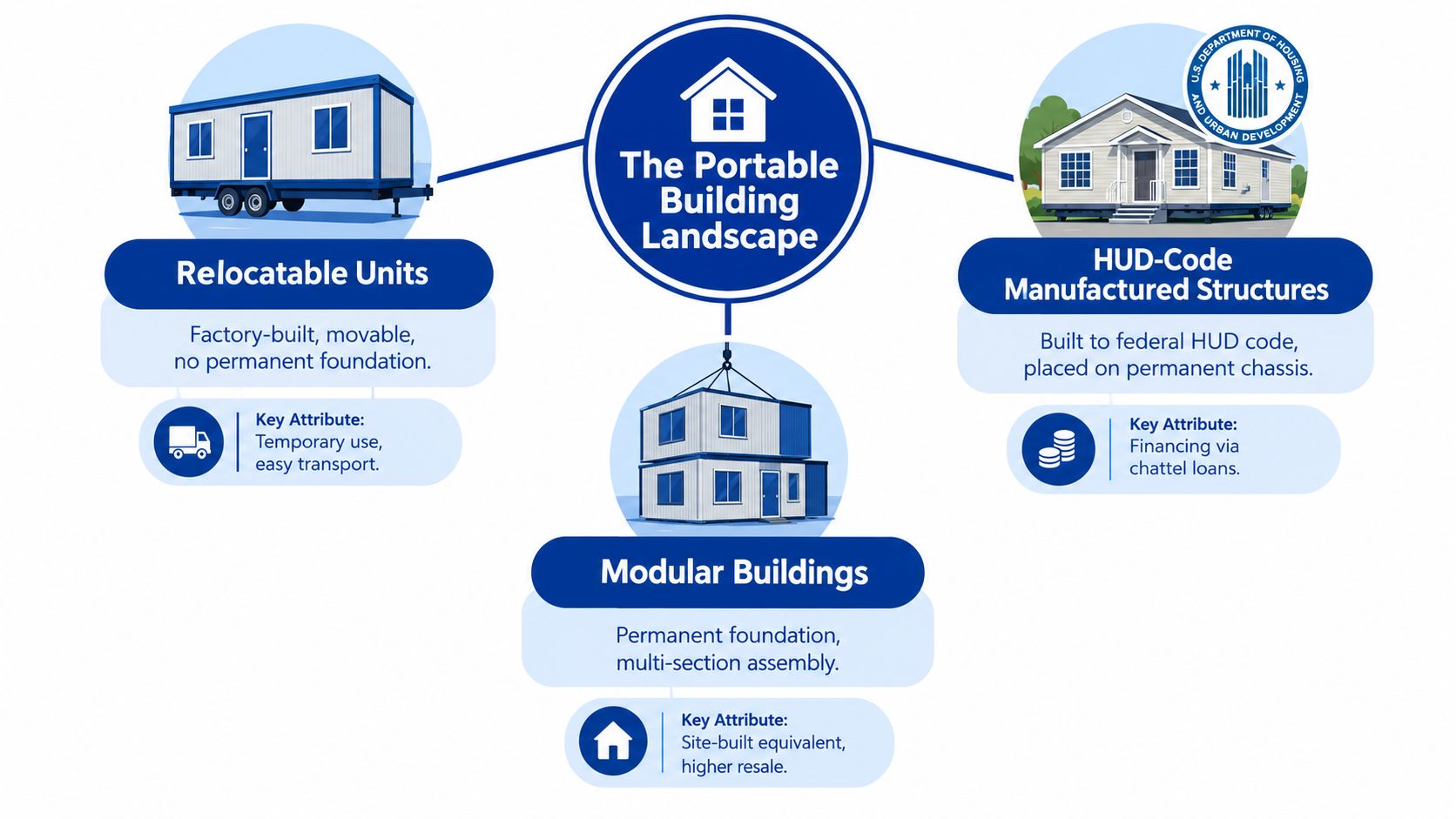
Before comparing listings, buyers should identify what kind of building they're looking at. Factory-built structures can be classified and regulated differently, even when sellers use similar descriptions. Ask for the building's code classification, intended foundation, transport requirements, and permitted use in writing.
Relocatable units
Relocatable offices and classrooms are built for transport and installation at a site, often to meet a temporary or changing space need. A unit may be leased, purchased, connected to site utilities, and moved again later. That flexibility doesn't waive local requirements. Buyers still need to confirm zoning, occupancy, egress, accessibility, fire safety, and any site-specific approvals.
HUD-code manufactured structures
HUD-code manufactured housing is a distinct category with its own federal construction standards and product characteristics. It shouldn't be treated as interchangeable with a modular classroom, office, or commercial building. Buyers should ask whether a unit is built to HUD code, what chassis and foundation arrangements apply, and whether its classification suits the project's planned use.
Modular buildings
The U.S. Census Bureau defines modular units as finished, three-dimensional sections built in a factory, transported to a site, and joined together on a permanent foundation. That definition helps separate a permanent modular facility from a structure meant to be relocated: the modular building may be factory-built, but its intended role is permanent. Buyers should establish the code path and foundation requirements early, not infer them from the term “prefabricated.”
The market history also cautions against treating factory-built construction as one uniform product. Census-based analysis found 13,000 single-family homes completed with modular construction in 2024, alongside 15,000 built using panelized or pre-cut methods, out of 1,019,000 total single-family completions. The figures show that these methods occupy distinct, specialized parts of the broader building market, not a single category of portable product (NAHB's Census-based analysis of off-site construction).
New vs Used Portable Buildings
New and used buildings solve different problems. A new unit gives the buyer more control over layout, finishes, and specified systems. A used or reconditioned building may be available sooner and cost less to acquire, but a bargain only holds if the structure and systems can support the intended use without costly repairs.
| Decision point | New building | Used or reconditioned building |
|---|---|---|
| Condition | Specifications and construction details can be set before delivery | Existing wear, repairs, and prior use need inspection |
| Warranty | Warranty terms are established with the seller or manufacturer | Coverage may be limited, expired, or non-transferable |
| Configuration | Floorplan, finishes, and equipment can be selected | Buyers may need to accept the available layout |
| Availability | Production and delivery schedules need confirmation | An available unit may shorten the wait |
| Service life | Often better suited to a longer planned service period | Value depends on remaining condition and expected repairs |
A new building is usually the better choice when the project needs a specific classroom, clinic, or office layout, or when a longer period of service justifies specifying HVAC and envelope requirements. It also makes it easier to document what was installed and what the warranty covers. Buyers should still confirm actual production timing and delivery conditions rather than assume that “new” means immediate.
What to inspect in a used unit
A used building should pass a hands-on review before a purchase is approved. The inspection should cover the frame and floor, signs of water intrusion or concealed damage, roof and exterior connections, doors and windows, electrical equipment, plumbing where installed, and HVAC operation. Buyers should request maintenance and repair records, then verify whether the systems meet the intended occupancy and local code requirements.
Practical rule: A used unit is a good buy only when its verified condition, delivery cost, and remaining useful service life make sense together.
Reconditioning should be described in writing. Ask which components will be repaired or replaced, what testing will be completed, and what warranty applies after delivery. For buyers comparing available inventory, used modular buildings for sale can be one option to assess, alongside new units and leases.
Modular Construction vs Traditional Site-Built
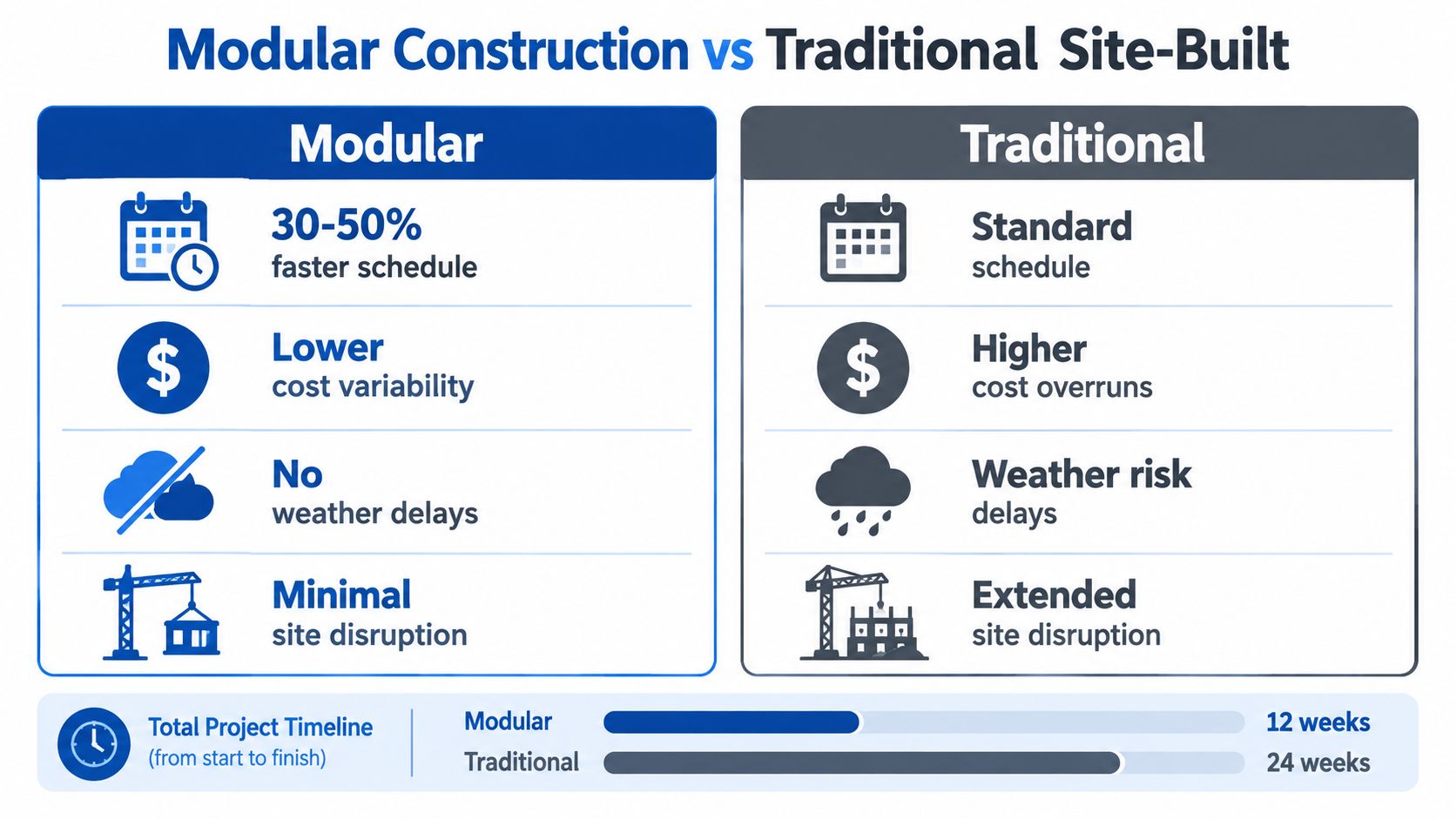
The main advantage of modular construction is the chance to complete factory fabrication and site preparation in parallel. Under suitable conditions, McKinsey estimates modular techniques can shorten end-to-end project timelines by 20% to 50% and reduce costs by as much as 20%. Those outcomes depend on design coordination, site readiness, transport, and procurement, so they shouldn't be treated as a guaranteed discount (McKinsey's analysis of modular construction).
Where modular has an edge
A modular approach can suit schools, healthcare providers, and public agencies that need capacity while existing operations continue. Factory work can reduce the amount of construction activity on the occupied site and can limit exposure to weather during fabrication. The project still needs a coordinated code and inspection plan, including clarity on which work is completed in the factory and which is completed or inspected locally.
Modular is less compelling when modules must travel a long distance, access roads constrain their dimensions, or a crane can't reach the placement area efficiently. Transportation and setup can absorb the expected savings. Buyers should price delivery and installation against the actual route and site, not a generic estimate.
Where site-built can win
Traditional construction can be the stronger fit when the design needs to respond closely to an irregular site, when transport constraints limit module size, or when local contractors can complete the work with fewer handoffs. It can also suit projects where the building's form and construction sequence are tightly integrated with other on-site work.
Modular remains a comparatively small part of the U.S. housing stock: less than 4% was built using modular techniques, compared with about 15% in Japan and 45% in Finland, Norway, and Sweden, according to McKinsey's analysis. Those comparisons provide context, but they don't decide a local project. The buyer still needs a site-specific comparison of schedule, scope, transport, foundation, and permitting.
For projects with multiple contractors and compliance requirements, teams may also find it useful to find construction software for compliance while organizing approvals and project documentation. A closer look at the differences between modular and stick-built construction can help buyers frame the method decision, but local logistics should settle it.
Landed Cost, Financing, and Lifecycle Value
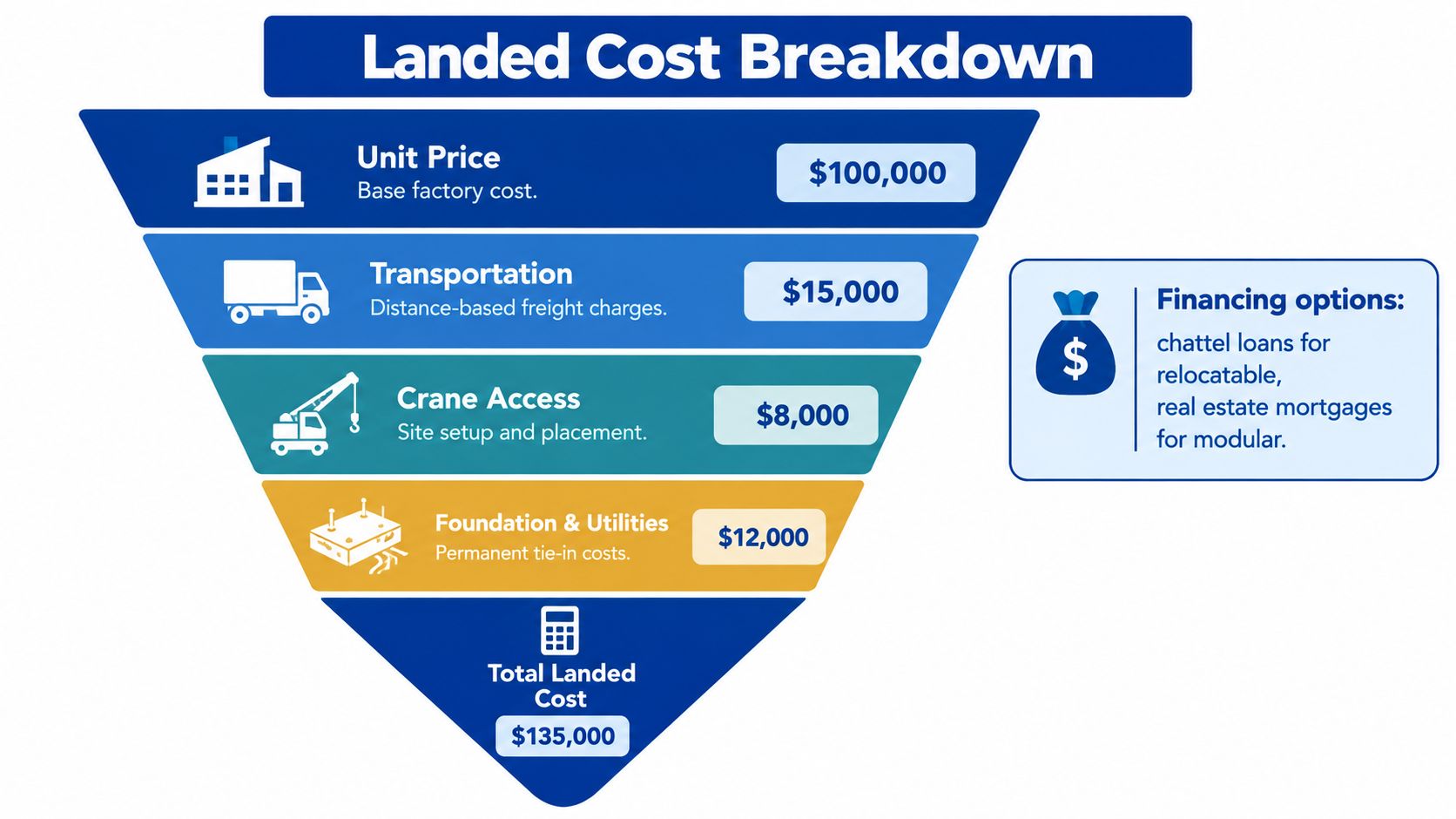
A quote for the unit is not a project budget. The number that matters is the landed cost: the complete expense of getting a compliant, usable building onto the site and ready for occupancy. That total can change sharply with transport distance, site access, foundation design, and utility work.
Build the project budget from the site outward
Ask each seller to separate the building price from the costs that follow. A useful landed-cost worksheet includes:
- Unit and options: Building configuration, finishes, HVAC, electrical, plumbing, and any requested upgrades.
- Transport and placement: Freight route, escort or access needs, crane requirements, and installation.
- Site and foundation: Site preparation, drainage, foundation or supports, and any required tie-downs.
- Connections and compliance: Utility tie-ins, accessibility improvements, inspections, permits, taxes, and insurance.
- Future disposition: Maintenance, refurbishment, possible relocation, removal, and resale assumptions.
That list is a starting point, not a quote. Each line needs an owner and a written scope. If the vendor excludes foundations or utility connections, the buyer should get separate estimates before comparing proposals.
Choose financing around the building's use
Purchase makes sense when the organization needs control of the asset and expects to use it over a longer period. Leasing can fit a temporary need or an uncertain timeline, especially when return or relocation is part of the plan. Public buyers may also consider cooperative purchasing contracts where available, but they should confirm that the contract covers the building type and services required.
Financing terms can depend on classification and foundation. Buyers should ask lenders how they treat a relocatable unit versus a permanent modular facility rather than assume both qualify for the same structure of financing.
Lifecycle value depends on more than financing. Energy performance, maintenance, refurbishment, likely moves, and resale all affect what the building costs over its useful life. Transportation can also affect environmental results: a study of volumetric modular construction found transport increased emissions, despite a small overall lifecycle advantage in that comparison (comparative embodied-carbon analysis of high-rise modular and conventional construction). Buyers can use a life cycle cost analysis guide to organize assumptions, then apply them to the actual project rather than treating a general benchmark as a forecast. For a project-specific estimate, compare the cost considerations for modular construction.
A short explainer can help teams distinguish purchase price from the wider delivery and lifecycle decision:
The Buyer Specification Checklist
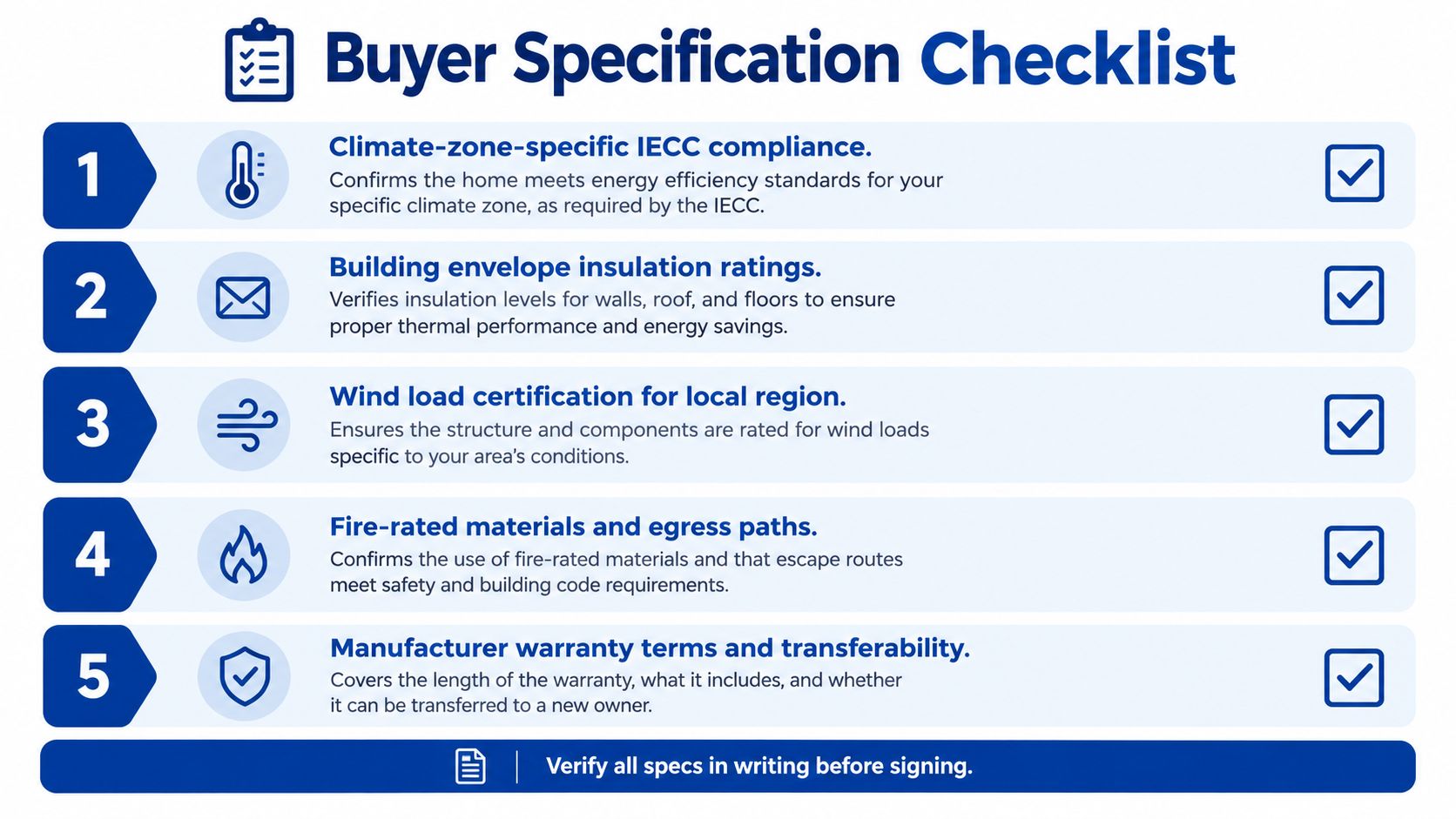
A purchase specification should make performance and responsibility explicit. A brochure may describe a finished office or classroom, but it won't necessarily show whether the building meets local requirements or how its systems perform after installation. Buyers should attach a clear scope to the request for quotation and ask vendors to identify exceptions.
Require documentation, not adjectives
For the building envelope, request the climate-zone-specific energy-code compliance path, assembly U-factors, window performance, continuous air-barrier details, and whole-building leakage test documentation. The 2018 International Energy Conservation Code includes an air-leakage benchmark of no more than 0.25 cfm per square foot in applicable provisions for whole-building pressurization testing. The code metric, test scope, and applicable requirements depend on jurisdiction, so the buyer should ask the vendor and local authority to confirm the project's actual criteria (2018 IECC commercial envelope guidance).
For classrooms and offices, ventilation needs a measurable specification. ASHRAE education-facility guidance calls for at least 6 total air changes per hour, including at least 2 ACH of outdoor air. Harvard's Healthy Buildings program recommends a combined 4–6 ACH target in classrooms through outdoor ventilation, filtration, and air cleaning. These are design references, not replacements for local code, occupancy calculations, or healthcare-specific requirements (ASHRAE education-facility design guidance).
Put installation and use requirements into the RFQ
Include these items before comparing bids:
- Code and structure: Classification, occupancy, wind-load documentation, fire-rated materials, egress, and inspection responsibilities.
- HVAC and air quality: Outdoor-air delivery, total ACH, filtration, controls, and testing and balancing records.
- Access and site work: Accessible entry and ramps, utility connection points, foundation details, crane access, and any work excluded from the vendor's scope.
- Quality and warranty: Structural and water-intrusion inspection records, warranty duration and coverage, exclusions, and transferability.
- Handover: As-built plans, commissioning records, operating instructions, and a written process for service requests.
The DOE identifies ventilation assessment metrics for certain occupied-building applications, including minimum airflow set points above 17 cfm per person or 2 ACH and peak CO₂ targets around 965 ppm. Treat these as assessment references rather than universal specifications, and have the engineer confirm applicable conditions. For a portable building, the practical test is whether the installed HVAC system can maintain the required airflow at design conditions, including when filters load.
Matching Building Types to Real-World Use Cases
The use case should determine the building type, not the other way around. A flexible unit can be the right answer for a temporary need and the wrong one for a long-term facility. The buyer should match intended service life, occupancy, and site conditions before settling on new, used, lease, or permanent modular construction.
Education and healthcare
A school district managing enrollment swings or a facility renovation may need a modular classroom or SAGE-style complex that can provide instructional space while campus work proceeds. A lease can suit a time-limited need; a new purchase may fit a longer-term capacity plan or a district with specific classroom requirements. Either route needs a site and permitting review before delivery.
A clinic adding exam, treatment, or administrative capacity should treat the building as a healthcare project, not a general office. The buyer should confirm the intended clinical use, HVAC and ventilation requirements, accessibility, utility needs, and local approvals. Used units may be worth considering for non-clinical swing space, but clinical use calls for close review of configuration and systems.
Government, construction, and commercial
A government agency that needs administrative space during a facility replacement may benefit from a relocatable office that preserves operations. A construction or industrial site may be better served by a ground-level office container, office-and-storage combination, or separate storage containers, depending on access and security needs. These projects often reward straightforward layouts and reliable delivery more than custom finishes.
For a permanent administrative facility, data-center support space, or other long-term use, buyers should compare permanent modular construction with site-built options. Pacific Mobile Structures, Inc. sells, leases, and custom-builds relocatable and permanent modular buildings for education, healthcare, government, and commercial uses, which makes it one option for organizations comparing temporary space with a longer-term facility. The recommendation remains project-specific: lease when duration is uncertain, buy used when condition and remaining service life are verified, and specify new or permanent construction when the building must meet a defined long-term program.
Questions Buyers Ask After the Comparison
How early should an order be placed? Get a schedule from the seller after confirming the site, approvals, utility scope, and building configuration. Delivery timing alone doesn't include permitting or site readiness.
Who pulls the permits? The contract should name the responsible party. Owners often retain local approvals, but sellers may support documentation or manage parts of the process; never assume this is included.
What foundation is required? It depends on the building classification, design, soil, and local requirements. Get the foundation design and responsibility confirmed before purchase.
Can the building move later? A relocatable unit may be moved, but disconnection, transport, reinstallation, and condition can affect its value. A permanent modular building isn't automatically easy to relocate.
What happens to resale value? There's no reliable universal figure. Keep maintenance records, preserve plans and approvals, and evaluate the cost of removal and transport alongside likely resale interest.
Pacific Mobile Structures, Inc. offers mobile offices, storage containers, relocatable buildings, and permanent modular construction for organizations planning temporary or long-term space. Compare purchase, lease, and custom-build options for the project's intended service life, then contact Pacific Mobile Structures, Inc. to discuss the building, site, and delivery requirements.