Shipping container rental costs typically fall between $75 and $300 per month, with 20-foot units near $75–$200 and 40-foot units around $100–$350, depending on condition, region, and lease length. The monthly rate is only the starting point, because delivery, site access, contract duration, and market conditions can change the full cost substantially.
A facilities manager may discover that reality after requesting two quotes for what appears to be the same container. One supplier offers a low monthly rate but bills delivery separately. Another quotes a higher rent yet includes placement and pickup. The second offer can be cheaper by the end of the project, even though it looks worse on the first line of the proposal.
Table of Contents
- Why Container Quotes Vary So Wildly
- Base Rental Rates by Container Size
- Shipping Containers Versus On-Site Storage Units
- The Hidden Costs That Inflate Your Bill
- How Lease Duration and Market Cycles Affect Pricing
- Making the Right Rental Decision for Your Project
Why Container Quotes Vary So Wildly
A facility manager comparing two 20-foot container quotes may see a surprisingly wide gap. Both units appear suitable for dry storage, both suppliers serve the same general region, and neither quote looks obviously wrong. The difference usually comes from the details hidden behind the monthly figure.
Shipping container rental cost is a market-priced asset, not a fixed national schedule. Rates move with container availability, regional inventory, unit condition, transport distance, and the length of the agreement. The storage containers for rent resource from Pacific Mobile reflects the practical reality that rental decisions involve more than selecting a box and multiplying rent by the number of months.
The four variables behind the quote
Geography affects both inventory and trucking. A supplier with containers nearby may offer a sharper base rate because repositioning the unit takes less effort. An inland site, a remote project, or a location with limited carrier access can produce a higher delivered total even when the advertised rent looks similar.
Condition changes what the renter receives. A weather-tight unit intended for general storage may cost less than a newer container with cleaner surfaces, better doors, or a higher grade. Paying for condition makes sense when appearance, reliability, or specialized use matters. It doesn't make sense when the container will hold durable materials at a rough job site and cosmetic quality has little value.
Lease length also changes the economics. Month-to-month flexibility carries a different price structure from a longer commitment. A supplier needs to account for scheduling, turnover, and the risk of retrieving the asset quickly, while a longer contract provides more predictable utilization.
Market cycles create another layer. Container leasing rates respond to global shipping activity and supply-demand shocks. A supplier quoting during tight availability may price the same equipment differently from one quoting during a period of abundant local inventory.
Practical rule: Treat every quote as a package of rent, logistics, condition, and contract terms. Comparing monthly rent alone compares only one part of the purchase decision.
The cheaper quote often fails because it omits delivery, pickup, placement constraints, or the rate that applies after an introductory term. A proper comparison starts by asking what the quoted amount includes, when the rate changes, and whether the supplier has confirmed that the site can receive the container without special handling.
Base Rental Rates by Container Size
For standard dry containers, a reasonable 2026 budgeting range is about $75–$300 per month, although the exact offer depends on size, condition, region, and lease length, as documented in this 2026 shipping container rental cost guide. Twenty-foot units commonly fall near $75–$200 per month, while 40-foot units are often around $100–$350 per month.
A 40-foot container typically costs 35%–50% more per month than a 20-foot unit, even though it offers roughly double the storage volume, according to the same market guide. That creates an important value question. A larger unit can provide more capacity per rental dollar, but it also demands more delivery planning, more placement space, and potentially higher logistics charges.
Benchmarking the monthly offer
| Container Size | Month-to-Month Rate | 12-Month Lease Rate | Size Premium |
|---|---|---|---|
| 20-foot unit | $75–$120 | $55–$95 | Baseline |
| 40-foot unit | $130–$249 | $100–$185 | Typically 35%–50% above a 20-foot unit |
The benchmark ranges in the table come from Container Compass rental pricing guidance. The figures should be used to screen quotes, not to replace a site-specific proposal. A unit in strong condition, a constrained delivery area, or a short commitment may sit toward the upper end. A longer agreement and flexible scheduling can move the effective monthly amount lower.
The UK-style comparison in the Angi guide shows a similar size pattern, with long-term pricing of roughly £84–£147 per month for a 20-foot dry container and £137–£210 for a 40-foot dry container. The currencies and local logistics differ, but the underlying lesson is consistent. Size, region, and contract structure matter more than a single universal “average.”
Condition determines whether the rate is sensible
A renter shouldn't pay a premium for condition that the project won't use. General equipment storage may need protection from weather and functioning doors, while a public-facing installation or conversion project may justify a cleaner, newer unit.
A practical size guide for Lexington storage can help teams think through capacity before selecting a container. Choosing the smallest unit that supports safe loading may reduce both rent and delivery complexity. Conversely, selecting a 20-foot unit for a growing inventory can create a second rental, extra transport, and avoidable handling later.
For a closer look at condition differences, Pacific Mobile's guide on container grades and why not all containers are created equally provides useful context before a buyer accepts a supplier's grade description.
Shipping Containers Versus On-Site Storage Units
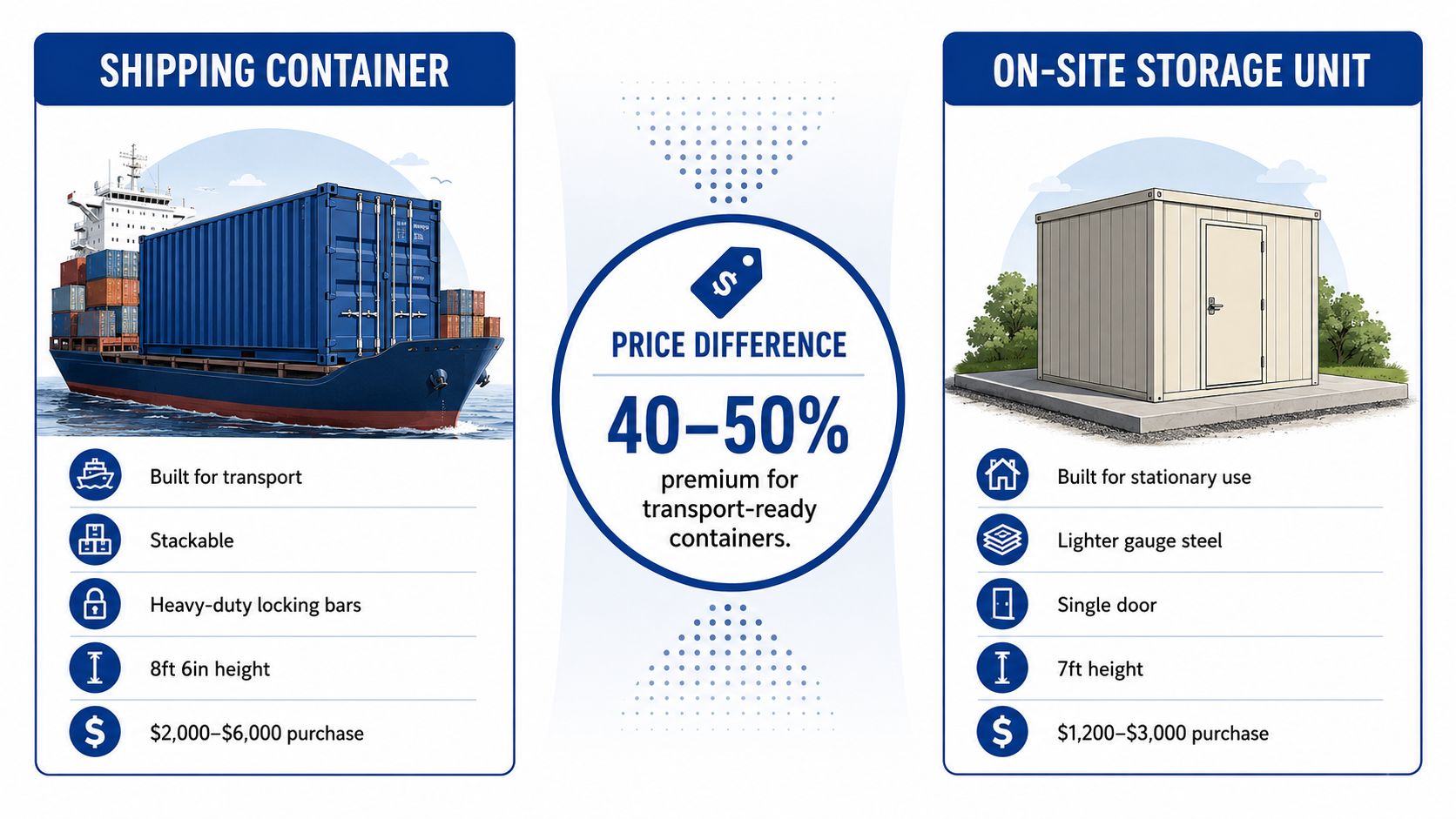
A transport-ready shipping container and an on-site storage unit can both hold materials, but they aren't interchangeable in every project. The shipping container is engineered for demanding movement, stacking, and cargo handling. An on-site unit is generally selected for stationary placement, convenient access, and a storage function that may not require transport-grade construction.
What the renter is actually paying for
A shipping container typically brings heavy-duty locking bars, a corrugated steel shell, and a design intended to withstand movement and stacking. Those features are valuable for contractors who may relocate the unit, businesses that need sturdy site storage, and projects exposed to demanding handling conditions. They can be unnecessary overhead for a facility that wants a stationary room for files, supplies, or boxed inventory.
An on-site storage unit may be easier to access and better suited to a fixed compound. Depending on the supplier, it may support options such as personnel doors, shelving, lighting, ventilation, or other practical modifications. Those features can improve daily use, but they may also affect the rental proposal and setup requirements.
The choice should follow the operating need:
- Choose transport-ready construction when relocation, rugged handling, stacking compatibility, or cargo-grade durability matters.
- Choose stationary storage when employees need frequent access, the unit will remain in one position, and convenience matters more than maritime specifications.
- Compare the door arrangement before approving a quote. A large cargo door supports pallets and equipment, while a personnel door may be more convenient for routine visits.
- Check the internal environment if the contents are sensitive. Steel construction protects against weather, but it doesn't automatically provide insulation or climate control.
The single-wall box guide from Storage & Removal Boxes Ltd offers a useful comparison point for buyers assessing simpler stationary storage products. Packaging and stationary storage solutions may suit lighter-duty needs, while a shipping container remains the more appropriate choice for heavy equipment and demanding site conditions.
The cost decision therefore isn't just “container versus unit.” It is a question of whether the project needs mobility and structural resilience or stationary access and usability. Paying for transport capability that won't be used can waste budget. Choosing a lighter solution for a rough construction environment can create maintenance and security problems later.
The Hidden Costs That Inflate Your Bill
A low monthly quote can become expensive once delivery, placement, pickup, and site constraints enter the calculation. Container Compass estimates delivery at $100–$400 for smaller units and $200–$800 for larger units, with distance and site accessibility affecting the final amount. On a short rental, those charges can outweigh a modest difference in monthly rent.
A procurement method that exposes the full total
Step 1, define the requirement. Record the container size, contents, required condition, delivery address, expected start date, and likely end date. A request for “one storage container” leaves too many pricing assumptions unresolved.
Step 2, request two rates. Ask for both the month-to-month rate and the rate tied to the expected lease term. The Pacific Mobile checklist of questions to answer before renting a storage container helps buyers identify operational details before requesting proposals.
Step 3, separate each logistics line. Require delivery, placement, pickup, access limitations, and site equipment to appear separately. A narrow entrance, soft ground, overhead obstruction, or limited turning area can change the delivery method and its cost.
Step 4, inspect the contract language. Confirm when billing begins, how renewal works, what happens after the initial term, and who pays for damage beyond ordinary wear. A low rent figure provides little protection when the return conditions remain vague.
Step 5, calculate the full rental period. Multiply the applicable rent by the expected term, then add delivery and known pickup or site charges. Compare this figure across suppliers, not the bold monthly amount at the top of the quote.
The quote isn't complete until the supplier explains how the container reaches the site, how it leaves, and what happens if the schedule changes.
Security belongs in the same cost review. Containers holding tools, materials, or equipment may require stronger lock arrangements, lighting, cameras, or site controls. Guidance on construction tool theft prevention from Overton Security helps project teams assess protection needs without assuming a lock alone addresses the risk.
A short video can help teams review practical container placement and rental considerations:
Watch the container placement and rental considerations video
The common procurement mistake is comparing one supplier's rent with another supplier's delivered total. Request identical scope, separate recurring and one-time charges, and record the assumptions beside every figure. That process exposes whether a cheap quote stays cheap after the container is delivered, placed, used, and collected.
How Lease Duration and Market Cycles Affect Pricing
Container leasing economics are often expressed as a per-TEU-per-day rate, even when a local supplier presents a monthly invoice. A recent market report places normalized dry-container lease rates around $0.35–$0.65 per TEU per day, with 20-foot dry containers in early 2025 around $0.38–$0.52 per TEU per day after the sharp volatility of 2021–2023 eased, as reported by Dataintelo's container leasing market analysis.
That pricing structure explains why monthly offers tend to land in the low hundreds for standard dry units. The supplier is pricing an asset over time, while also considering container type, utilization, contract duration, and current market conditions.
Selecting a term without overcommitting
Longer commitments generally reduce the effective monthly cost because the supplier gains predictable utilization and avoids repeated turnover. The trade-off is flexibility. A project that ends early may continue paying rent, face an early-return condition, or lose the savings associated with the original term.
Short-term rental makes sense when the end date is uncertain, the container supports an emergency response, or the site is temporary by design. A longer lease is more defensible when the project schedule is stable and the container will remain useful throughout the agreement.
Market timing adds another decision layer. When suppliers have excess inventory, buyers may find more room to negotiate delivery timing, term structure, or unit selection. During tight supply, the same buyer may face fewer condition options and less flexibility. The exact monthly figure still depends on location and supplier inventory, so market-cycle awareness should inform the conversation rather than dictate a speculative purchase date.
A practical decision framework
- Known project duration: Match the lease term closely to the confirmed need and ask whether delivery or pickup is bundled.
- Uncertain schedule: Favor a flexible agreement and clarify renewal pricing before accepting a low introductory rate.
- Stable recurring storage: Seek a longer commitment, but confirm the early-return and substitution clauses.
- Specialized container type: Price the type separately from the term, because dry, refrigerated, modified, and office-storage units don't share the same economics.
The industry summary cited by Dataintelo places long-term rental economics around $100–$150 per month for a 20-foot unit and $150–$220 per month for a 40-foot unit. Those figures reinforce the central point. Lease duration changes the effective rate, but the contract should still be evaluated against transport, condition, and operational requirements.
Making the Right Rental Decision for Your Project
A sound rental decision compares total cost of rental, not headline rent. The calculation should include the base monthly amount, the term-specific rate, delivery, pickup, site constraints, and any protection or service charges stated in the proposal.
Consider two hypothetical quotes without assigning invented totals. Quote A has the lower monthly rent but bills delivery separately and offers no meaningful reduction for a longer commitment. Quote B has a higher monthly figure, yet includes logistics and applies a lower rate for the project's full term. Quote B may produce the lower total once every scheduled charge is included.
Questions that improve supplier negotiations
- What exactly is included in delivery? Ask whether placement, standard unloading, and pickup are part of the quoted logistics scope.
- Which rate applies to the full term? Confirm whether the monthly price changes after the initial period.
- What condition is guaranteed? Request clear language covering weather protection, door operation, floor condition, and visible damage.
- What happens if the project ends early? A flexible exit clause may be worth more than a small monthly discount.
- Can the supplier confirm site access? Provide photos, measurements, surface details, and overhead-clearance information before delivery is scheduled.
Procurement teams should also compare the cost of a larger unit against the cost of adding capacity later. A 40-foot container may offer more volume, but the project still needs enough room for placement and delivery. A 20-foot unit may be easier to position, even if the storage plan requires tighter inventory control.
Pacific Mobile Structures, Inc. offers storage containers for rent and purchase, along with mobile offices and modular construction services, so its container and modular space options can be included when a project needs more than basic storage. The supplier comparison should remain consistent: request the same size, condition, term, delivery scope, and site assumptions from every provider.
The strongest quote is the one that fits the project schedule and reveals its full cost. Buyers who document those terms before signing are less likely to discover that a cheap container became an expensive logistics decision.
Project teams can request a detailed storage-container proposal from Pacific Mobile Structures, Inc. and compare base rent, delivery, placement, pickup, and lease terms in one procurement review. Share the site location, container size, expected rental period, and access conditions so the supplier can prepare a practical quote rather than a headline estimate.