A storage container rental averages about $125 per month, with typical pricing from $75 to $200, while size steps from 10-foot to 40-foot units establish the baseline before delivery and other fees. The monthly figure is only the starting point.
A school needs secure space for desks during a renovation. A contractor needs a dry box beside a job site before materials arrive. A clinic needs temperature-sensitive supplies protected from heat. Each buyer may ask for “a container,” but those requirements won't produce the same quote.
The practical question isn't how much rent costs. It's what the container will cost to place, operate, access, insure, and remove. Storage container rental prices change with use case, contract length, location, site conditions, and availability. Size matters, but it often matters less than buyers assume.
Table of Contents
- What Storage Container Rental Prices Really Include
- How Size and Use Case Shape Your Quote
- Common Pricing Models and How Duration Changes Cost
- Hidden Fees and Extra Charges to Watch For
- Proven Strategies to Lower Your Storage Container Rental Cost
- Choosing the Right Rental and Next Steps
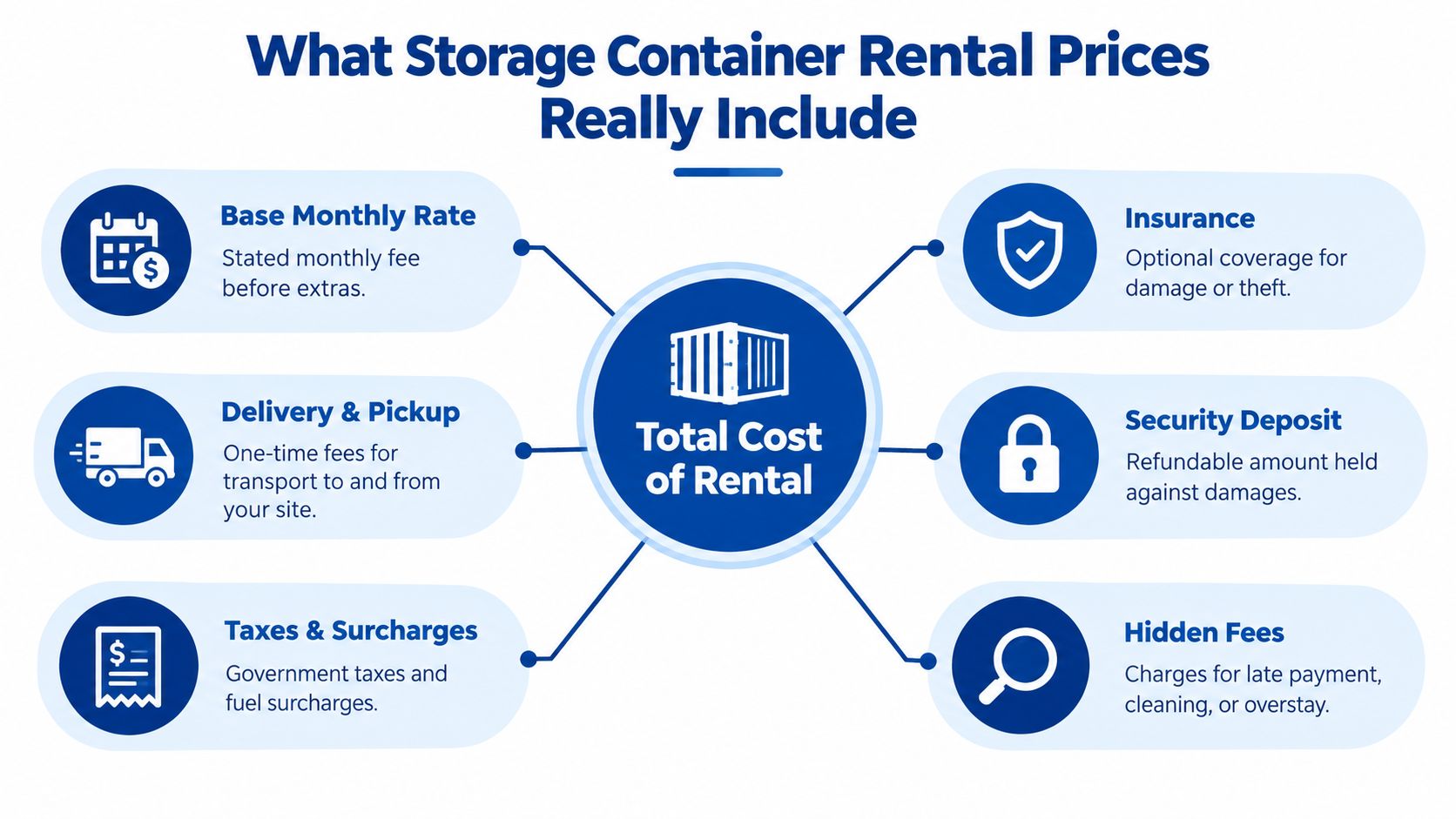
What Storage Container Rental Prices Really Include
A project manager comparing two quotes for the same 20-foot dry container can find a wide gap. One vendor may advertise a low monthly rate, then bill transport separately. Another may include delivery, pickup, placement, and a better-inspected unit in the headline price. Compare the invoices line by line before choosing the lower number.
Every quote has three cost buckets:
- Base rent: The monthly fee for the container.
- Service level: Unit condition, delivery support, access terms, insurance options, and special equipment.
- Site costs: Transport distance, placement difficulty, permits, ground preparation, and utility requirements.
Residential dry storage commonly runs $75 to $175 per month, while commercial dry-container use commonly runs $130 to $280 per month, according to market pricing data for portable storage container rentals. Commercial pricing reflects more than the customer category. Active job sites often require tighter scheduling, heavier coordination, and equipment suited to daily operations.
The base rate isn't the invoice
A standard dry unit is the simplest case. Refrigerated storage adds power consumption, temperature control, and maintenance. These units can reach roughly $450 to $950 or more, as described in storage container rental pricing guidance. A clinic or food operation that compares only dimensions will overlook the largest cost driver.
Geography changes the baseline. Premium urban markets such as New York City and San Francisco can run 30% to 40% above national averages. Local inventory, trucking availability, congestion, and placement restrictions determine whether that premium appears in the quote.
The site can cost more than expected
A level site with direct truck access is straightforward. A school campus with restricted delivery windows, a construction site with limited turning space, or a property requiring a crane creates a different operating job. The container may be standard, yet coordination and placement can add substantial charges.
Match the equipment to the use. An office-storage combination may require lighting, electrical connections, ventilation, insulation, steps, or ramps. Review this guide to container grades and construction differences before treating visibly similar units as interchangeable.
Ask one direct question: what will this cost each month after delivery, placement, access, and removal?
Practical rule: A useful quote states the monthly rent, every one-time charge, the included service, and the conditions that trigger extra fees.
How Size and Use Case Shape Your Quote
A 10-foot unit may solve household overflow or fit a compact site, while a 40-foot unit can provide far more capacity without doubling the rent. Size sets the starting tier, but use case, rental duration, inventory, and geography usually determine the monthly cost.
Broader 2026 pricing guidance places 10-foot rentals around $50 to $125 per month, 20-foot rentals around $100 to $150, and 40-foot rentals around $150 to $250. It also places overall rental pricing around $75 to $200, with an average near $125 per month. These figures come from the 2026 shipping container rental cost guide.
| Container Type | Typical Monthly Range | Best For |
|---|---|---|
| 10-foot dry container | $50 to $125 | Household overflow, small inventory, compact sites |
| 20-foot dry container | $100 to $150 | General commercial storage, construction materials, school equipment |
| 40-foot dry container | $150 to $250 | Large inventory, major renovations, high-volume storage |
| Refrigerated container | $450 to $950 or more | Temperature-sensitive materials, clinical or food-related use |
Why the 40-foot premium can be modest
A larger container does not always produce a proportionate rent increase. One comparison places 20-foot units around $90 to $200 and 40-foot units around $120 to $300. Fleet availability, unit condition, and local demand can outweigh length alone.
That comparison is useful, but capacity is not the only test. A 40-foot unit is poor value if the site cannot accept it, the access path is tight, or staff need frequent retrieval. A 10-foot unit becomes expensive when limited capacity forces a second delivery.
Match the equipment to the work
Dry storage suits boxed goods, furniture, tools, and weather-sensitive materials that do not need active temperature control. Refrigerated equipment serves a different purpose and carries a service premium because its cooling system must run reliably. The refrigerated range remains around $450 to $950 or more, so confirm the power requirements and operating responsibility before approving the quote.
Office-combo units also require separate pricing. They may combine workspace and storage, but electrical connections, access, installation, and site preparation change the scope. Buyers comparing configurations can use the Amax Marketing quote tool to organize an initial estimate, then confirm delivery and placement details with providers.
Review storage containers available for rent by usable capacity, door access, condition, and placement requirements, not length alone. A quote should show the equipment, the intended use, and the site conditions behind the price.
Common Pricing Models and How Duration Changes Cost
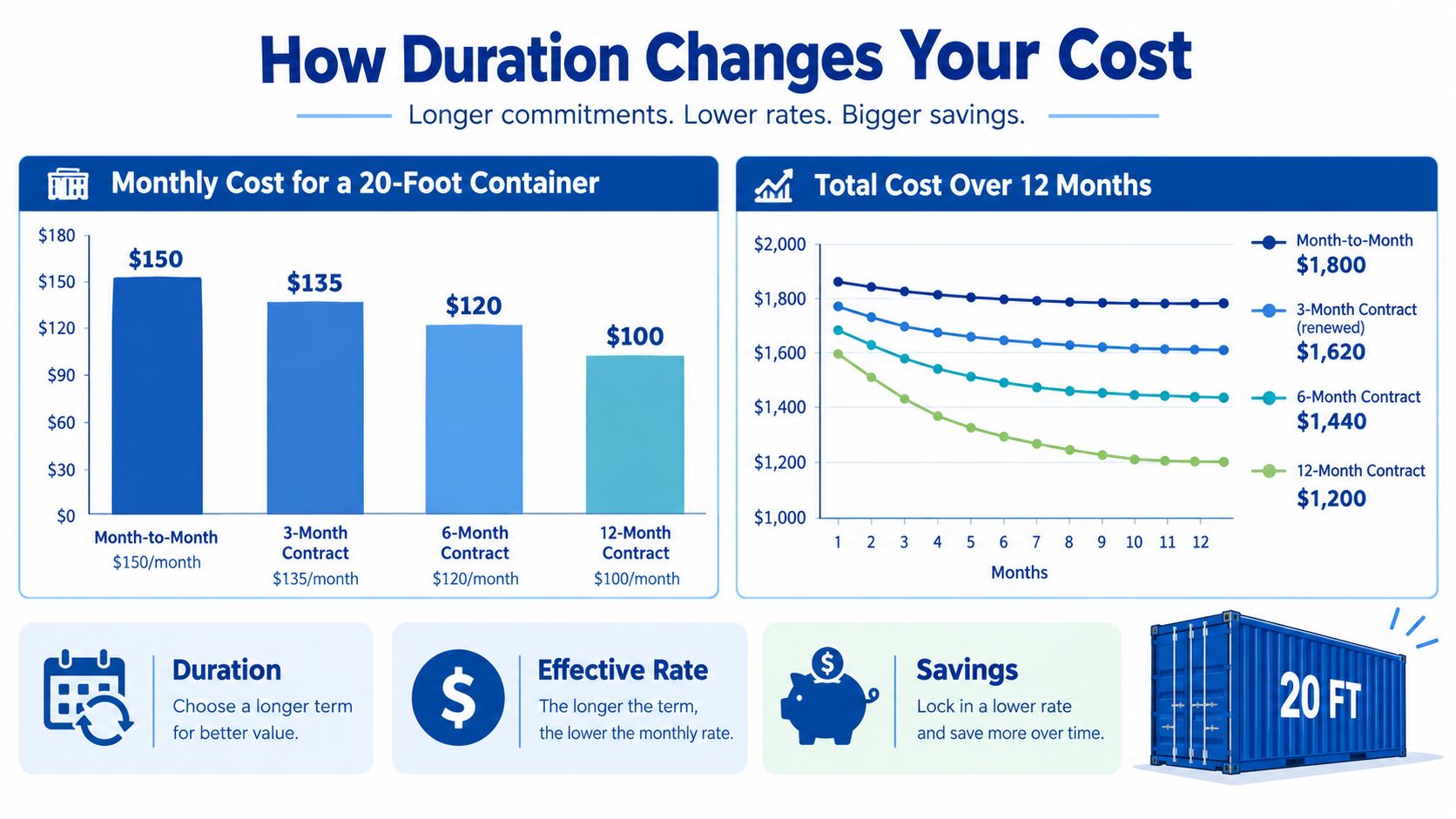
Duration changes the price you pay. Month-to-month rental preserves flexibility, but the provider carries more scheduling and inventory risk. A longer commitment gives the operator a clearer revenue horizon, so the effective monthly rate usually falls. Compare the total contract cost, not only the advertised monthly rent.
A one-month rental runs about $75 to $300, a three-month rental about $200 to $900, and a full-year rental about $900 to $3,600, according to this shipping container rental cost guide. These ranges show why the quote must state the rental period from the start. A low monthly figure can still produce a higher total when the term is short or the delivery area is difficult.
Flexibility has a price
Month-to-month terms suit uncertain end dates, changing project schedules, and temporary emergencies. You pay for the right to return the unit without a long obligation. Ask whether the provider can hold the rate, and confirm the notice period before signing.
Longer commitments can reduce the effective monthly cost. A European 2026 guide lists 20-foot dry storage at about £147 to £263 for short term, £105 to £189 for medium term, and £84 to £147 for long term. It also describes a possible reduction of roughly 35% to 45% as the rental horizon extends. See the European container rental pricing guide for that comparison.
U.S. guidance places month-to-month pricing around $95 to $175 and 12-month terms around $75 to $130. The lower rate only helps if the container remains in service long enough to use the discount. If the project ends early, an exit charge can erase the savings.
Decision rule: Choose a longer term only when the storage need is predictable and the contract explains early termination clearly.
Break the choice into three horizons
For a short emergency, flexibility usually outweighs a modest rate reduction. A defined renovation or seasonal inventory cycle may justify a medium commitment. Recurring storage with no credible end date deserves a comparison between the long-term rental total and the cost of purchasing a used unit.
Ownership adds capital cost, delivery, placement, maintenance, security, and eventual resale or removal work. Rental shifts more of that operating burden to the provider. For schools, clinics, and job sites, that service predictability can matter more than achieving the lowest headline rent. Geography and use case still shape the final quote, so request the full monthly and projected total before committing.
Hidden Fees and Extra Charges to Watch For
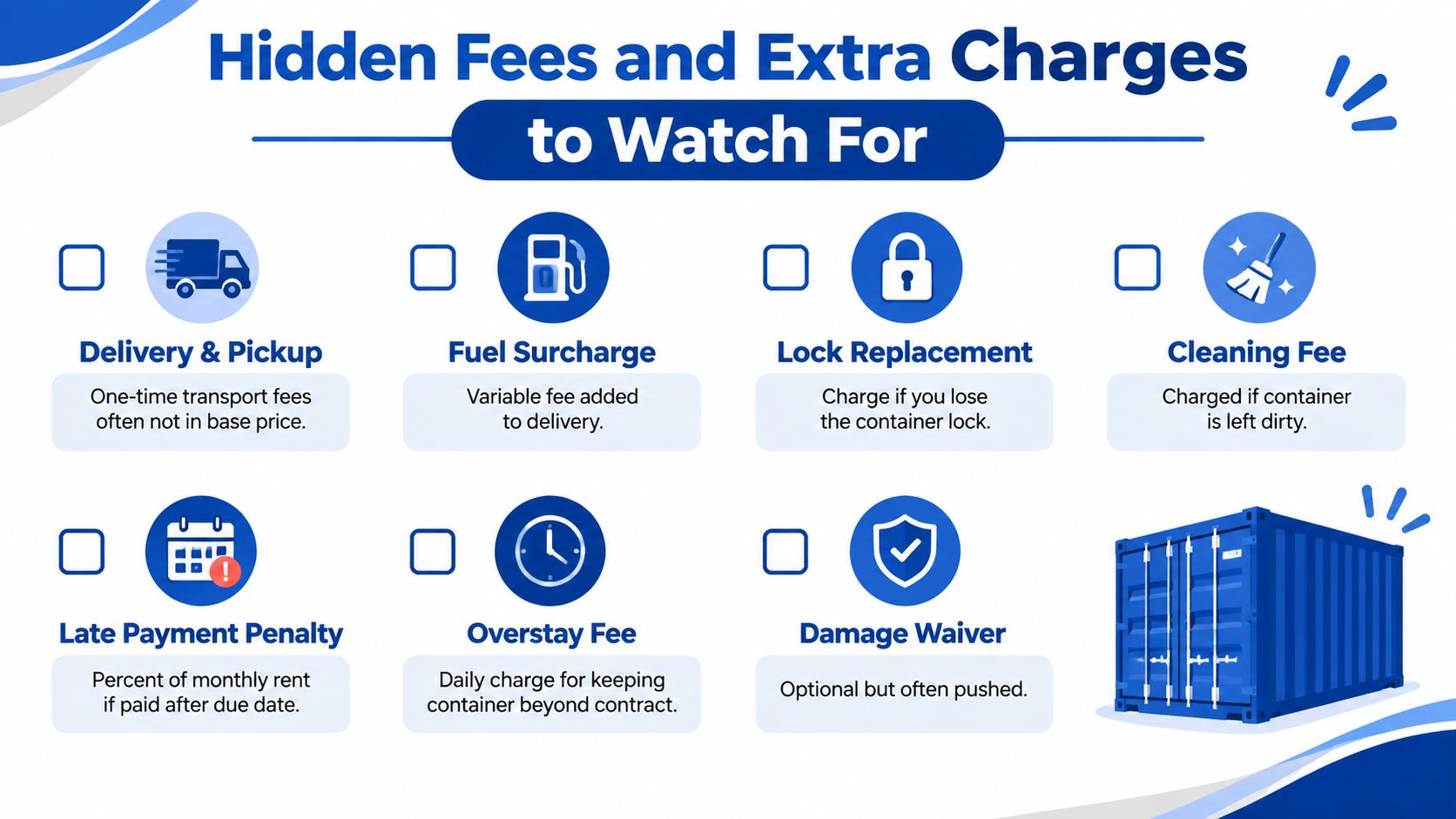
A low base rate can become an expensive arrangement when the quote excludes the work required to place and support the container. Delivery and pickup are the obvious examples, but buyers should also check fuel surcharges, security requirements, insurance, cleaning, late payment terms, overstay charges, and damage responsibility.
A construction manager should ask whether the delivery truck can reach the intended pad without blocking active work. A school facilities director should confirm whether the campus requires a scheduled arrival, a spotter, or special access approval. These details can affect the total more than a modest difference in monthly rent.
Audit the quote before signing
The following checklist forces an apples-to-apples comparison:
- Transport: Confirm delivery and pickup pricing, distance assumptions, truck type, and whether placement is included.
- Fuel: Ask whether a fuel surcharge can change and when the provider applies it.
- Access: Check whether repositioning, additional visits, or site changes create charges.
- Protection: Clarify insurance, damage waivers, theft responsibility, and exclusions.
- Condition: Record the unit's condition at delivery and ask about cleaning or repair billing.
- Contract: Read late payment, overstay, renewal, notice, and early-termination provisions.
- Site work: Verify who handles permits, ground preparation, steps, ramps, and utility connections.
A refundable security deposit may be held against damage. A lock may be supplied, required, or billed separately. None of those items should remain an assumption.
Request one all-in number
The strongest request is simple: “Please provide the monthly rent, delivery, pickup, taxes, surcharges, deposit, insurance options, and every condition that could add a fee.” The provider should respond with a written quote that separates recurring charges from one-time charges.
Buyers should then calculate the effective monthly cost for the actual rental horizon. A one-time transport bill has a much larger effect on a short rental than on a long one, so comparing base rent alone distorts the decision.
Before approval: No container quote is complete until the site, service scope, and removal terms are written down.
Proven Strategies to Lower Your Storage Container Rental Cost
The easiest savings usually come before the container arrives. Buyers who know the required size, delivery window, contract horizon, and site conditions can negotiate a complete package instead of reacting to separate charges after the quote is issued.

Use the commitment as leverage
A buyer with a reliable timeline should ask for a longer-term rate, not merely a lower first-month price. The request can be direct: “The project needs a 20-foot dry unit through the planned completion date. What rate applies if the full term is contracted now, and what happens if the schedule changes?”
That wording tests both the discount and the exit risk. A low rate with a harsh termination clause may not beat a flexible agreement.
Used or reconditioned inventory can also lower the headline rent when the contents need weather protection rather than showroom condition. The provider should document the unit's floor, doors, roof, seals, and visible corrosion so the buyer doesn't trade a lower rate for repairs or operational disruption.
A school district, agency, or multi-site operator can ask about cooperative purchasing. Pacific Mobile Structures, Inc. participates in purchasing cooperatives such as KCDA and TIPS, which can streamline procurement for eligible organizations. The buyer still needs an all-in quote, but an established purchasing route may reduce administrative friction.
For organizations managing adjacent needs, practical planning resources such as guidance to find coverage for mobile homes can help separate storage requirements from broader temporary-space or occupancy questions.
Bundle the logistics
Ask the provider to price delivery and pickup together with the rental term. A bundled proposal makes competing offers easier to compare and gives the operator a reason to protect the full job rather than win only the monthly-rate line.
Timing can help as well. Flexible delivery dates may give the provider more routing options, while a prepared site reduces waiting time and failed delivery attempts. The savings won't come from choosing the smallest box blindly. They come from removing avoidable service work.
The following video can help buyers think through portable storage planning and practical site considerations:
Know when renting stops making sense
Rental remains attractive when the need is temporary, the end date matters, or the provider's delivery and maintenance support has real value. Purchase deserves a serious comparison when storage is expected to continue for years, the site is stable, and the organization can manage ownership responsibilities.
A buyer shouldn't compare rent to purchase price alone. The purchase analysis must include delivery, placement, condition, security, repairs, and eventual removal. The correct answer depends on the full operating plan, not a single low listing.
Choosing the Right Rental and Next Steps
The right quote begins with three answers: what must be stored, where will the container sit, and how long will it remain there? Those answers determine the type, site service, and contract structure before a vendor calculates the monthly rate.
A household with short-term overflow may prioritize a small dry container and flexible terms. A contractor may need a 20-foot unit with dependable job-site delivery. A clinic or school may need a higher service level, controlled access, and coordination around active operations. A commercial buyer with stable, recurring demand should compare an extended rental against buying used.
Ask every provider these questions
- What is included in the monthly rent? Request the unit condition, access terms, insurance options, and service scope in writing.
- What will delivery and pickup cost at this exact site? Provide the address, access restrictions, surface conditions, and placement location.
- What happens if the schedule changes? Confirm renewal, cancellation, overstay, damage, and early-termination terms before approving the order.
The questions to answer before renting a storage container provide a useful final check before signing. A buyer should collect comparable written quotes, calculate the total for the intended term, and reject any proposal that hides the removal cost or relies on verbal promises.
The strongest decision is rarely the quote with the lowest monthly number. It's the quote that matches capacity to use, includes the logistics, and gives the buyer a clear financial outcome.
Pacific Mobile Structures, Inc. offers storage containers for rent or purchase, along with delivery, setup, accessories, and modular space solutions for sectors including education, healthcare, government, construction, and commercial operations. Visit Pacific Mobile Structures, Inc. to request a quote based on the container type, site, service requirements, and rental timeline.